
“Think Global, Act Local”
OUR VISION is a future where Shaftesbury is able to meet the challenges of a changing world under threat from climate change and nature loss by recognising that a healthy natural world is the cornerstone to humanity’s very survival as well as human health and happiness.
OUR MISSION is to work with the local community to address and adapt to the climate and nature emergency through a comprehensive plan of action to reduce greenhouse gas emissions and protect and restore nature, working towards a resilient future for Shaftesbury residents and the planet.

For details of the Action Plan please click on the following headings:
Vision Statement and Masterplan
Appendix B: Biodiversity Checklist
Appendix F: Open Spaces Management Plans [in progress]
Appendix G: Useful links/references/leaflets [to be added]
Useful Information:
Carbon Footprint Impact Report – Shaftesbury Town
Are you interested in finding out more about protecting our natural environment, climate and ecology? Have a look at our Shaftesbury Orchard Town and Glyphosate and Bee Friendly pages. Dorset Council has news and resources on their website. You can also sign up to their newsletter and select Climate and Nature to receive a round up of climate news from Dorset Council.
For more on Sustainable Shaftesbury and how it works, please scroll down past News Updates.
News updates
Keep up-to-date with climate change and nature recovery news in Dorset. News reports from Sustainable Shaftesbury Advisory Committee (SuSAC).
Eco changes to building rules we’ve all been waiting for. But little change until 2028
The Government last month finally announced changes to building regulations environmental campaigners have been demanding for decades that will make installing solar panels and heat pumps mandatory on new developments.
The new Future Homes Standard, published on 24th March by Ed Milliband’s Department of Energy Security & Net Zero, amounts to updated regulations on the way new homes have to be built in England.
Campaigners are disappointed that the new rules do not come in force until March 2028. But in a gesture to campaigners the government has said ‘plug-in’ solar panels will be available for people to buy in shops ‘within months’.
Plug-in solar panels are low-cost panels that families can put on their balconies or outdoor space. Plug-in solar is already widely used by households across Europe, with Germany seeing around half a million new devices plugged in per year.
Lidl and Iceland are among those retailers now working with manufacturers such as EcoFlow to bring them to the UK market.
The panels can be plugged directly into a mains socket like any other device without any installation cost, thus reducing the amount of electricity taken from the grid and cutting energy bills by using free solar power.
A Government statement claimed that ‘the Future Homes Standard turns the page on over a decade of failure by previous governments.
‘More than a million homes were built with higher bills following the cancellation of the Zero Carbon Homes standard in 2015 – leaving families exposed to the energy price spike after Russia’s invasion of Ukraine.’
It claimed the new regulations ‘will put energy in the hands of the British people and help cut bills for good, protecting against fossil fuel price spikes like those triggered by the conflict in Iran.’
It did not explain why large-scale implementation has been delayed for two years but it is believed to be to give volume housing developers such as Persimmon Homes and BarrattRedrow time to adjust.
For more details see: Future Homes and Buildings Standards and Home Energy Model and Government to make ‘plug-in solar’ available within months.
30 March 2026
SPECIAL NEWS FEATURE
Wessex Farms biodigester approval splits Dorset’s environmental opinion
Both anger and support have been expressed by local environmental campaigners in Dorset following Dorset Council’s controversial approval last month of planning permission for a large scale anaerobic digester plant near Shaftesbury.
Dorset Council’s strategic and technical planning committee granted permission for the 6.16 hectare plant at its meeting on 24 March despite opposition from both Gillingham and Shaftesbury town councils as well as Motcombe parish council.
The approval has split Dorset’s environmental campaigners.
The developers 1st Estate Biomethane Ltd* claim the site, a mile to the west of Shaftesbury off the A30 Sherborne Causeway, will produce some 18.3 million cubic metres of biogas that would be upgraded to 9.9 million cubic metres of biomethane a year.
But the decision angered local activist Jenny Morisetti, chair of Sustainable Dorset and vice-chair of Sustainable Shaftesbury Advisory Committee (SuSAC) who lives at Stour Provost, who said she ‘despaired’ at the decision.
“I’m passing on my frustration at the nonsense of growing crops to feed bio-digesters. Shaftesbury already has a large battery storage unit and more solar capacity planned than the local population can use.”
“Why are we not concerned about food security? There is already a large bio-digester plant at Brains Farm near Wincanton less than 30 mins from this proposed site. Where will all the maize, grass and cereals come from to feed two nearby digester plants?”
“Why not opt for wind turbines instead which provide energy without the need to grow crops? Why don’t the planning committee understand that this is not “green” energy [but] just another money-making scheme hiding under green credentials. I’m in despair!”
She added she realised approval had been granted but she’s fearful that further applications will follow.
“There’s very little of the type of waste that the planning application states will be used in the area. The Blackmore Vale is predominantly pasture.”
“I can’t find where they said they’d use hedge clippings but I find that hard to believe. [Its] very difficult to collect up. Feeding the biodigester with silage waste is better than spreading it on fields but growing maize to feed it is damaging in many ways.”
Jenny continued: “Although wheat and sugar beet are also planted as bioenergy crops, it is the area allotted to maize crops for energy that has mushroomed in recent years. The latest government figures show that 88,000 hectares of maize are now planted each year just to feed anaerobic digesters.”
“It’s so important to look at the bigger picture and not at one planning application in isolation. What interest does a Japanese company have in protecting the UK’s food security?”
But she was opposed by the Green Party’s Dorset county councillor Belinda Bawden who supported the application. She said: “The planning officer’s report and presentation was very thorough and the benefits of the proposal seemed to me to outweigh the harms, especially over time, [for example by offering] 79% biodiversity net gain [BNG].”
She said “[there’s] 153% BNG from hedgerows, more control of water pollution (animal & human waste is currently spread on farms, so gets into water courses), replacement of poor quality agricultural land with a circular process which converts a waste problem into two valuable products – biogas for 87,000 homes and fertiliser.”
She added that the developer had assured Dorset planners that ‘much of the material will be existing waste from the farm itself and from farms within a 15-mile radius.’
“It’s mostly animal slurry which would otherwise be less well managed and regulated. It seems a much more safe, modern and circular system which benefits farmers by turning their waste into useful products which will save them money.”
She said she felt the food security and loss of food production issue in this case was ‘a red herring – assuming the information [from the developer] is honest, of course.
“We are a long way behind Europe on this and the NFU and other farming groups are crying out for more bio-digesters as an environmentally sensible way to manage animal and plant waste.”
Belinda, who represents Charmouth & Lyme Regis, concluded that she felt the planning debate had been ‘thorough and considered’ and urged people to watch the recording and read the reports (see: Agenda for Strategic and Technical Planning Committee on Tuesday, 24th March, 2026, 10.00 am – Dorset Council).
Dorset Climate Action Network (DCAN) chair Giles Watts, however, said he was ‘not swayed by the BNG arguments’ and wondered whether DCAN should be mounting a campaign against any more digesters in Dorset.
He said “the issue seems to be whether maize is grown specifically to feed biodigesters or whether it only uses waste that would need to be got rid of anyway. Certainly wind turbines, or even solar panels, are a much better way of generating electricity.”
But Belinda was supported by DCAN coordinators John West and Sam Wilberforce who both claimed that biodigesters were on balance ‘a valuable element in a waste management strategy.’
John said he had read the Shaftesbury [planning] report and could see why it was considered acceptable [to approve the application] on planning policy grounds – ‘assuming the information is reliable’.
“Bio-digesters that rely primarily on feedstock grown for the digester are perhaps more questionable. However to put things into context, the figure of 88,000 hectares quoted as used to grow maize for feedstock represents just 0.014% of all land available for crop growing in the UK [according to UK government figures].”
Sam said he agreed with Jenny that food security was an important issue that needed to be taken into account but he knew of good examples of biodigesters in use as well as bad.
“When Poundbury was built, the anaerobic digester was built to produce biogas from food waste from restaurants, used thatch, stubble and chocolate waste! But what happened was all the farms for several square miles around started growing maize and rye grass to feed the plant.”
“Of course the Duchy [of Cornwall] is not subject to the same planning regulations as the rest of us but I feel the planners were duped by the greenwash without any specification of where the feedstuff is coming from.”
“On the other hand the biodigester at Piddlehinton does turn peelings into power and appears to me to deserve its green credentials.”
The challengers were supported by SuSAC chair Richard Thomas who said Jenny Morisetti had raised “a series of quite proper political challenges that need to be and should be addressed and that I suspect many people both locally and nationally agree with.”
He said it was not just the food security issue under scrutiny but planning law in the UK and the trustworthiness of what developers claim that is also at stake.
“The problem in this country is the quasi-judicial nature of planning law and planning policy that sits – theoretically at least – outside local government policy. Planning law lags way behind what we need and have needed for many years – for example, the need for all new builds to have solar panels and heat pumps as routine as well as proper insulation.”
“Planning law does not yet mandate this and the latest Planning and Infrastructure Act 2025 that’s now law does not mandate it either and so developers just ignore it.”
He said the government published changes to building regulations last month that would make developers install panels and heat pumps on all new build but they don’t come into force until March 2028 (see separate news item on this page).
“It means housing developers can continue to ignore “green build” with impunity – and planning officers are powerless to prevent them. Everyone agrees it’s wrong but all you’ll get from planning officials and most elected members is a wringing of hands begging for understanding while the law catches up.”
He said that despite the approval for the Wessex Farm biodigester two issues remained: that of food production on the one hand and the reliability of the claims made by the developer on the other.
“A lot of local people fear that a lot of land will be turned over to sterile crops to feed the bio-digester rather than people. At the same time, local people – in both Shaftesbury and Gillingham – have been so severely betrayed by developers who have lied to get planning permission and by planners who have been hoodwinked by the lies that they simply neither trust anything that any developer says nor the local planning authority’s ability to accurately check and monitor the claims.”
“We will only know the truth, of course, when it’s too late – and we discover fields of maize being grown to feed the Wessex Farm digester.”
“Meanwhile we can now only cross our fingers and hope that the developers want what’s best for us all rather than their own bottom line and that Dorset Council follows up properly on the planning conditions.”
*1st Estate Biomethane Ltd is a joint venture set up in 2023 between 1st Estate Service Limited, an agricultural land and rural estate manager, and Iona Capital Ltd, a renewable energy infrastructure investor. It is based in central London.
30 March 2026
Special community screening of The People’s Emergency Briefing at Shaftesbury Town Hall
What’s happening with climate and nature, and what does it mean for everyday life in the UK?
Join Planet Shaftesbury for a screening of the People’s Emergency Briefing – an eye-opening film bringing together nine leading UK scientists and experts with the latest evidence and why it matters for things like:
🌧️ Extreme weather
🍞 Food security
🏥 Health
💷 Cost of living
The film is based on the National Emergency Briefing in Westminster (featured by ITV, Channel 4 and The Times) with appearances from Chris Packham, Deborah Meaden, and a range of voices from across the UK.
People’s Emergency Briefing – Watch the Trailer
After the film there will be a short open discussion about what it means for our community and what we can do locally.
📍Shaftesbury Town Hall
📅 Monday 27th April 2026
🕖 7pm
Seats are free but limited so please book your ticket. Bring a friend, neighbour or family member: everyone is welcome.
Find event details on Planet Shaftesbury website
Note: the film is only being shown at in-person screenings and is not available online.
27 March 2026
Dorset’s new Local Nature Recovery Strategy promises large-scale action – and praises Shaftesbury’s key nature projects
Dorset Council has promised comprehensive action on nature recovery in the county following the formal launch of its long-awaited Local Nature Recovery Strategy (LNRS) on Wednesday (25 March).
Speaking to SuSAC after the event, Amy Smith, Dorset Council’s local nature recovery officer, said: ‘The strategy is not just a document, but [it’s] a mechanism that triggers practical action for nature’s recovery’.
And she praised the three key projects that Shaftesbury is already working on as part of the strategy – the Nature Friendly Town, Orchard Town and Green Wheel initiatives.
‘It’s fantastic that [those three] initiatives are happening in Shaftesbury [and] we’ll be looking at ways we can best gather together the ambitions and outputs from that great work as part of measuring progress in the county and sharing knowledge to inspire similar action in other places,’ she said.
‘We’ll also be looking at ways to identify shared barriers to delivery and find ways to unblock or overcome these, as well as working together to drive forward and support new actions and projects.
She added the launch event explained how Dorset Council is interpreting the four key strands for delivery Dorset must meet as ‘the responsible authority’ under the Environment Act 2021 legislation and the different groups that the council is proposing to set up.
The four key strands, or functions, to ‘ensure the implementation of nature recovery actions’ are:
- Lead and convene a delivery partnership: To plan and prioritise delivery, bringing together stakeholders such as BCP Council, Natural England, farmers, and community groups.
- Embed LNRS into local decision-making: To incorporate the strategy into local plans, planning processes (like Biodiversity Net Gain), and other environmental initiatives.
- Identify strategic projects and facilitate project development: To identify key on-the-ground projects that will meet the priorities set out in the strategy, such as habitat creation and nature-based solutions.
- Monitor and report on delivery: To track progress on the implementation of nature recovery activities and evaluate achievements every three to ten years.
Amy said the first of the delivery groups – the Nature Recovery Dorset Delivery Group (NRDDG) – has been set up and has already held its first meeting.
‘More updates will be available as the delivery work progresses and the slides from the event will be shared so this will hopefully provide you some more clarity, ‘ she said.
More information is on the Dorset Council website and will also be featured on this page as developments occur.
Dorset Council | Dorset unites to launch landmark local nature recovery strategy
27 March 2026
CLIMATE: WMO’s latest climate report confirms the years 2015-25 the hottest on record
The World Meteorological Organisation’s latest State of the Global Climate report confirms that 2015-2025 were the hottest 11 years on record – and that 2025, at about 1.43°C above the 1850-1900 average, was the second or third hottest year on record.
For the first time, the report includes the Earth’s energy imbalance as one of the key climate indicators.
The report, published on 23 March, said that extreme events around the world, including intense heat, heavy rainfall and tropical cyclones, caused disruption and devastation and highlighted the vulnerability of our inter-connected economies and societies.
The report continued: ‘The ocean continues to warm and absorb carbon dioxide. It has been absorbing the equivalent of about eighteen times the annual human energy use each year for the past two decades.
‘Annual sea ice extent in the Arctic was at or near a record low, Antarctic sea ice extent was the third lowest on record, and glacier melt continued unabated, according to the report.’
The report is online here State of Global Climate 2025 | WMO.
23 March 2026
NATURE: New rewilding film launched
Rewilding Britain celebrated World Rewilding Day on 20 March with the release of this new film on rewilding in Britain: Think you know what wild is? | You Tube
23 March 2026
NATURE: Latest news from Dorset branch of Butterfly Conservation
Butterfly Conservation is a UK-wide organisation with 32 branches, of which Dorset is one. They also have the headquarters of the national society in Dorset, near Lulworth. The branches and the national organisation work together to help butterflies and moths. You can find out about their work on their website. https://www.dorsetbutterflies.com/
Read their latest newsletter Butterfly Conservation Dorset Branch Newsletter No 108
23 March 2026
Dorset Council highlights two years of action to support wildlife and nature recovery
Two big announcements with major significance for the future of nature recovery in Dorset have been made by Dorset Council in the last few days.
The council has published a special biodiversity report showing the scale of work to protect and restore nature in Dorset.
Published on its website, the council’s report brings together actions from 28 teams between 2023-2025 and claims to show how biodiversity is embedded in day-to-day council operations – from land management and planning to education, highways and social care.
In comes in the week that Dorset’s first Local Nature Recovery Strategy is launched at a special event near Dorchester.
Outlining the council’s work over the last two years to conserve and enhance habitats, support species recovery and create opportunities for residents to connect with nature, the biodiversity report lists Dorset Council’s key achievements as including:
- Nearly 5,000 trees planted across council land
- Over 6,000m of new hedgerow grown
- 345,702m² of wildflower areas created
- 160,140m² of invasive species removed
- 25 natural flood management projects installed
- 62% of urban verges now managed specifically for wildlife
- 40% reduction in glyphosate use on the highway network
- More than £9 million invested in nature recovery through grants and stewardship schemes
Dorset Council also claims its country parks have recorded encouraging signs of wildlife resilience, including increases in breeding birds, butterflies and other species.
Council leader and cabinet member for climate Cllr Nick Ireland said: ‘This report shows how deeply the protection and restoration of nature is being built into the work of teams right across the council.
‘We’ve been taking action for many years, but bringing this together in one report demonstrates the breadth of activity and the commitment of our staff, partners and communities.
‘Protecting and enhancing Dorset’s natural environment is a shared responsibility, and this report highlights the progress being made.’
The comprehensive report, which shows how the council is meeting its biodiversity duty as required by the Environment Act 2021, also provides examples of nature‑positive practices happening across the county.
There has been wildlife‑friendly planting and habitat creation in schools, care homes and housing schemes and sustainable farming trials at council-owned farms.
Roadside verges and green spaces are being managed to support pollinators and increase biodiversity while outdoor learning opportunities are being provided for children.
Community engagement has been strengthened through the Nature Recovery Dorset Network, which now has 299 active members.
Major schemes such as the Blandford Waste Management Centre are also delivering significant biodiversity net gain through woodland, wetland and wildlife‑friendly design.
Dorset Council claims that the new Dorset Local Nature Recovery Strategy, officially launched on Wednesday this week, will expand nature‑based solutions over the next five years that support climate adaptation, increase support for sustainable farming and strengthen biodiversity monitoring across all services.
Cllr Ireland added: ‘This report sets the foundation for the next stage of Dorset’s nature recovery. By working together and investing in local projects, we can help ensure a healthier natural environment for future generations.’
The full Biodiversity Report 2023–25 can be found on the Dorset Council website.
23 March 2026
World faces ‘perfect storm’ of problems by 2030, UK’s chief scientist warned 27 years ago today
‘A “perfect storm” of food shortages, scarce water and insufficient energy resources threaten to unleash public unrest, cross-border conflicts and mass migration as people flee from the worst-affected regions, the UK government’s chief scientist will warn tomorrow,’ The Guardian newspaper reported on 18 March.
But this dramatic opening sentence was published not in 2026 but 27 years ago – in 2009.
The report continued: ‘In a major speech to environmental groups and politicians, Professor John Beddington, who took up the position of chief scientific adviser last year [2008], will say that the world is heading for major upheavals which are due to come to a head in 2030.
‘He will tell the government’s Sustainable Development UK conference in Westminster that the growing population and success in alleviating poverty in developing countries will trigger a surge in demand for food, water and energy over the next two decades, at a time when governments must also make major progress in combating climate change.’ Climate science | The Guardian
Sustainable Development UK became part of the UN’s 2030 Agenda for Sustainable Development adopted by 193 member states at the United Nations Sustainable Development Summit in 2015.
The 2030 Agenda for Sustainable Development in turn provides an ambitious, globally-agreed, shared blueprint for the world we want to see by 2030 centred around the 17 Sustainable Development Goals (also known as the Global Goals or SDGs).

The concern among a growing number of people is that with 2030 rapidly approaching the situation has not measurably improved since 2009 and arguably has now become even worse.
19 March 2026
ENERGY: Register now for the latest Dorset Climate Action Energy meeting
Join the Dorset CAN Energy Group for an online meeting on Monday 30th March at 7pm until 8.30pm.
Discussion Topics include:
Community Energy Projects
BESS systems
The Warmer Homes Plan, the Future Homes standards and the Local Power Plan
The DCE initiatives on Retrofit
Register your place for the Zoom meeting here – Dorset CAN Energy Group Meeting | DCAN
16 March 2026
CLIMATE CHANGE: Dorset Climate Citizens Panel report and video now online
The result of months of discussions between Dorset Council and a diverse group of local residents on climate change and ecological sustainability has now been published online.
Known as the Dorset Climate Citizens Panel, the group helped develop priorities and recommendations for how Dorset can build resilience and adapt to climate impacts.
Starting last October, the panel met to learn about local climate risks, hear from experts and explore the challenges facing Dorset. The Council is making it clear that the views of the panel are not necessarily those of Dorset Council – yet at least.
‘The Climate Citizens Panel is one part of a wider programme to develop a climate resilience and adaptation strategy for Dorset,’ said DC’s climate and ecological sustainability team manager Anthony Littlechild.
‘The panel’s outputs will be considered alongside wider engagement, research, policy, and best practice to help shape a strategy that is ambitious, evidence-based and deliverable.
‘We are also making it clear publicly that the panel outputs reflect the independent views of panel members and are not agreed council policy positions.’
The full panel report and video of the group has now been published online on the Dorset Council website at: Dorset Citizens’ Climate Panel – Dorset Council.
..with help from extra recruitment
Mr Littlechild added that the Council has now recruited ‘a dedicated role focused specifically on climate resilience and adaptation’ whose job will be to help develop a climate resilience and adaptation strategy for Dorset.
‘This new position will help carry forward the ideas and priorities raised by the panel and ensure we continue strengthening Dorset’s capacity to prepare for and respond to climate impacts,’ he said.
He did not say who holds the new role or how they can be contacted.
16 March 2026
NATURE: Latest episode of ‘Down in Dorset’ nature podcast now out
Bringing beavers back to Dorset’s rivers is one of the highlights of the latest episode of Down in Dorset, the new monthly podcast exploring local farming and wildlife now available.
Hosts Tim and Lizzie follow the great response to last month’s launch by returning with a closer look at how Dorset’s farms and natural habitats work side-by-side, they speak to ecologist Ian Alexander about his long-running mission to bring beavers back to local rivers, and farmer James Cousins shares his life on a 2,000 acre working farm.
They discuss Dorset’s ‘Big Five’ (deer, badgers, foxes, beavers and otters), how farmer cluster groups are creating new wildlife corridors, and the local partnerships helping to restore nature after decades of decline.
Down in Dorset is released on the last Friday of every month.
Listen by searching ‘Second Nature: Down in Dorset’ on your usual podcast app or by visiting the Second Nature website.
9 March 2026
ENERGY: Inspiring ‘how to’ film on community energy free at Shaftesbury School
Inspired by lockdown mutual aid initiatives, two artist-activists Hilary Powell and Dan Edelstyn decided to turn their London street into an energy-generating powerhouse to showcase a prototype for a new way of living.
Their hope: To galvanise a wider push towards sustainable alternatives and kickstart a solar-powered energy revolution.
How far they succeeded is brilliantly captured in Power Station, a funny and heart-warming true-life documentary film that gets a free public viewing at Shaftesbury School on Wednesday 11 March.
Directed by the pair, Power Station charts their turbulent journey from pitching the idea to their Walthamstow neighbours – including sleeping on the roof of their house in all weathers – to raising finance and launching a bid for a Christmas number one single.
Both comic and moving, Powell and Edelstyn’s film is not just a vivid testament on how to reduce your energy bills with solar panels by taking your street ‘off grid’, but is also a vibrant portrait of their local neighbourhood and the power of art in changing minds about what is possible.
For a trailer of this wonderful ‘must-see’ 96-mins long film go to:
Power Station on YouTube
To book your place at the film on 11 March see: Book tickets for Power Station film | Shaftesbury School
2 March 2026
ENERGY: Dorset Council wins national Clean Energy Power award
Dorset Council was last week named the national winner of the Clean Energy – Power Award at the 2026 APSE Energy Awards.
In a message to Dorset residents after the Birmingham NEC ceremony Dorset Council leader Nick Ireland said he had the privilege of representing Dorset at the Energy Summit, held in partnership with the Department for Energy Security & Net Zero (DESNZ), and chairing two of the morning sessions.
These brought councils, energy experts and community organisations together to talk honestly about the challenges and opportunities facing everyone.
He said one theme came up time and again: ‘How we can make it possible for local people to enjoy warmer, healthier homes that cost less to heat. It’s something I feel strongly about.
‘Everyone deserves a home that stays warm for longer, is affordable to run, and supports good health. A Greener Dorset means warmer, healthier, cheaper to run homes!
He added to win the Clean Energy Power Award ‘is a significant recognition of the hard work and innovation happening right across the council – from installing solar PV on more than 100 of our buildings, to supporting households and businesses through dedicated low carbon programmes, we’re proving that local government can lead the clean power revolution.
‘Our work is already cutting carbon, reducing the council’s energy bills and strengthening Dorset’s growing clean energy sector. We’re generating millions of kilowatt-hours of clean electricity each year and have reduced our grid electricity use by almost half. And we’re not slowing down.
‘Plans are underway for even more solar installations and future proofing our buildings for heat pumps, helping us move steadily toward our commitment to become a net zero council by 2035 and a net zero Dorset by 2045.
He continued: ‘We’re also making progress in other areas that support a greener future. A joint project with BCP Council – to roll-out thousands of new on-street “chargepoints” for electric vehicles – was announced this week. We’re making it easier for residents, businesses and visitors to make the switch to cleaner travel.
‘This £16.5 million project has been funded by mainly private sector investment plus government funding and will be delivered by Connected Kerb over the next 5 years.
‘Together, these steps are building a cleaner, healthier and more sustainable Dorset – one that we can all be proud of.’
* The Association for Public Services (APSE) is a UK-based not-for-profit organisation that helps over 300 local authorities improve frontline services like waste collection, parks, and housing. It acts as a network for local government officers, providing advice, training, and benchmarking.
2 March 2026
CONSERVATION: Tips on how to make your garden butterfly and moth friendly
Dorset-based Butterfly Conservation has introduced a Wild Spaces programme to help restore and enhance habitats for butterflies and moths. And to help gardeners turn their gardens into havens for butterflies and moths they’re offering regular tips online.
Shaftesbury became a ‘butterfly and moth friendly town’ last year to add to the town council’s earlier declaration of Shaftesbury as a ‘nature friendly town’.
For more information go to:
Create a Wild Space
and
Gardening for butterflies: Discover gardening tips
2 March 2026
NATURE: Dorset Local Nature Recovery Strategy finally set to launch
It’s been two years in the making but now the first Dorset Local Nature Recovery Strategy (LNRS) is set to be launched in March.
Formally adopted by Dorset Council in December, the strategy is the result of two years’ effort by the Dorset Local Nature Partnership (LNP) working with Dorset Council, Bournemouth Christchurch & Poole (BCP) Council and Natural England plus a wide selection of organisations, community groups, land managers, farmers and individuals from across the county.
The daytime launch is taking place on 25 March at the George Albert Hotel at Evershot near Dorchester. It’s free to attend (starting at 9.30am) but anyone interested must register online first.
For more information and to register go to: Annual Forum 2026: Launching the Dorset LNRS

27 February 2026
AWARDS: Congrats to Corsham Town Council for its ‘best climate response’ award
Congratulations from Sustainable Shaftesbury to Corsham Town Council in Wiltshire that last night won the National Association of Local Councils ‘Climate Response of the Year’ award at a glittering House of Lords ceremony in London.
The Climate Response award is won for ‘highlighting innovative projects that show an understanding of climate change and how its impact is being mitigated locally.’
Corsham, between Bath and Chippenham, was one of a number of winners of NALC’s Star Council Awards for 2026. None were from Dorset this year!
Bringing together councillors, clerks, MPs, parliamentarians, academics, national stakeholders and leading ‘opinion formers’, the annual event honours individuals and organisations that have in the judges’ opinion ‘demonstrated exceptional talent, innovation, and dedication in supporting their communities.’
• Corsham is officially entering the race to become the first-ever UK Town of Culture 2028. Inspired by the City of Culture scheme, this is a new competition to show the whole of the UK why you are proud of your town. The winning town will receive £3 million to deliver a cultural programme for local people across 2028. Shaftesbury please note!
25 February 2026
ENERGY: Climate change guru says opposition is looking like King Canute
Former chief executive of the independent Climate Change Committee, Chris Stark, is now in charge of the government’s ‘mission for clean power by 2030.’ In a special interview with Carbon Brief he explains why he thinks the economics of clean energy ‘just get better and better’, leaving opponents of the transition looking like ‘King Canute.’
King Canute – or Cnut – has a special place in the history of Shaftesbury because the famous Danish Christian king of England mysteriously died at Shaftesbury Abbey in 1035 aged only 45.
He was famous for allegedly demonstrating to gullible followers that even a king had no power to hold back the sea after getting a soaking by sitting on a chair on an Essex beach and unsuccessfully ordering the sea to turn back mid-tide.
18 February 2026
WASTE: Call to join in The Plastic Waste campaign in March
The UK’s Big Plastic Waste campaign is looking for local volunteers to sign up to its Big Plastic Waste investigation for a week in March.
The ‘count your plastic waste’ survey, from 9-15 March, hopes to ‘reveal the true scale of the UK’s plastic problem in order to call for a fair future that’s free from the impacts of the plastics crisis’, say organisers.
To join in the campaign go to: The Big Plastic Count
18 February 2026
HEALTH & WELLBEING: Dorset NHS wants the public’s comments on its first five-year plan
The Dorset public are being invited to comment and provide feedback on Dorset NHS’s first five-year health plan by responding to a webinar’ – a video presentation – it has launched online.
Dorset NHS is now working with Somerset and Wiltshire NHS on a new regional ‘hub’ concept of healthcare it hopes will benefit all residents living in the wider area.
A special feature of the plan is an emphasis on mental health in an effort to address the national pandemic.
You can watch the webinar and get more information at NHS Dorset 5-year plan webinar.
13 February 2026
Feeding Dorset Partnership aims to ‘make food resilience irresistible’
The Feeding Dorset Partnership (FDP) is inviting registrations to its first Zoom event of the new year with the aim of ‘making food resilience irresistible.’
The event is taking place on Monday 23 February at 7pm.
Presenters include Feeding Dorset Partnership’s Jon Sloper of the Help & Kindness charity, Alex Chambers from Tumbledown, and Sheri Ahmet and Rachel Millson of Edible Bridport.
The Partnership – that is now a member of the UK’s Sustainable Food Places network – says the purpose of the event is to ‘start the year with stories from people whose food projects have won local hearts and minds to add the Food Map of Dorset.
‘The aim is to share ideas about how to listen and how to connect effectively with each other and ask ourselves what is still needed to strengthen Dorset Food Security.’
Anyone is welcome to join online to share their story, news and views. Click to book your place at the Food Resilience Event.
Find out more about the Feeding Dorset Partnership.
11 February
Dorset’s Local Nature Recovery Strategy to launch in March
Dorset Local Nature Partnership is to launch its major Local Nature Recovery Strategy at a special forum near Dorchester on 25 March 2026.
Over the past few years Dorset Council – working as the Responsible Authority alongside BCP Council and Natural England as Supporting Authorities – has led an extensive and collaborative effort to create the Dorset LNRS, formally adopted in December 2025.
This milestone has only been made possible thanks to the involvement of so many organisations, community groups, land managers, farmers and individuals from across the county, including those who contributed valuable insights at our 2024 Annual Forum.
This year’s forum is about celebrating some of the fantastic work already happening to restore nature in Dorset and marking the transition from developing the strategy to delivering it collectively on the ground.
The event is free and includes:
· plenty of networking opportunities
· information stalls
· a complementary buffet lunch
Book your free spot for the Dorset Local Nature Partnership Forum.
11 February 2026
ENERGY: Videos animate Dorset’s ‘Home Habitats’ energy-efficiency campaign
A series of short campaign videos featuring fun quirky animal characters has been produced by Dorset Council to boost its ‘Home Habitats’ campaign and its free online tool Homewise.
Both are aimed at helping residents discover practical ways to make their homes more energy efficient. You can see how the characters bring the message to life in these short campaign videos.
Dorset Council leader Nick Ireland says: ‘Home Habitats also supports our wider ambitions for Dorset: warm, affordable homes, stronger communities, good local jobs, and a healthier natural environment.
‘By cutting energy waste and guiding residents to practical improvements, we’re lowering bills, improving comfort and wellbeing, backing local installers and suppliers, and caring for our countryside and coast for the long term.’
6 February 2026
FOOD: New Dorset podcast on farming, food and nature already a ‘hit’
A new podcast giving Dorset residents a fresh way to connect with life on the land week has already made the top listening lists.
Second Nature: Down in Dorset that had its first airing last week takes listeners behind the farm gate to explore what it really means to farm with nature in today’s countryside.
Co-hosted by Dorset farmer Tim Gelfs and nature podcaster Lizzie McLaughlin, the mini-series tackles big questions around wildlife, soil health, water quality and sustainable food.
The very first episode From Dorset fields to Dorset plates made an impressive start, reaching number 14 in Apple’s Top 200 for Home & Garden.
You can listen now by searching ‘Second Nature: Down in Dorset’ on your favourite podcast platform.
6 February 2026
TRANSPORT: Transforming public and community transport
Ambitious plans to ‘transform public and community transport’ were set out by Dorset Council’s cabinet last week when it explored a range of options for delivering what it called ‘a modern, integrated and community focused transport system’ throughout the county.
Central to the plans is increasing the number of buses and other forms of community transport to reduce rural isolation.
The cabinet said it hopes to see implementation of the plans from April 2027.
For more details and the full background see: Transforming Public and Community Transport
- Dinah’s Hollow update: Dorset Highways is inviting anyone with any comments, questions or feedback on the year-long engineering works at Dinah’s Hollow on the C13 south of Shaftesbury to direct them by email to dinahs.hollow@dorsetcouncil.gov.uk.
Despite the challenging weather and some initial issues with diversions, the council said last week that work to ‘stabilise’ the hollow following a number of land slips ‘is progressing well.’ The road is not due to reopen until until the end of 2026.
30 January 2026
TRAVEL: Dorset approves new Active Travel infrastructure plan
Dorset Council last week finally gave the go-head to start building the infrastructure for the Active Travel plan for Dorset initially agreed last September.
The Active Travel Infrastructure Plan (ATIP) sets out the network plans for walking, cycling and wheeling in the county. Wheeling is moving about on anything on wheels that isn’t cycling.
Consisting of a network plan with a prioritised list of improvements, the ATIP forms part of the detailed delivery strategy in support of the emerging Local Transport Plan.
According to Dorset Council ‘infrastructure improvements for walking, cycling and wheeling assists with delivering objectives in the Council Plan including supporting communities for all, assisting with the delivery of the Climate and Ecological Emergency strategy and will also support the emerging Dorset Council travel plan.’
Dorset Council’s Place and Resources Overview Committee had recommended that the Active Travel Infrastructure Plan be approved by Cabinet last September but no reason was given for the delay in approving the plan.
For more details see: Active Travel Infrastructure Plan for Dorset
30 January 2026
ENERGY: Dorset Council launches online tool to help residents save money on heating their homes
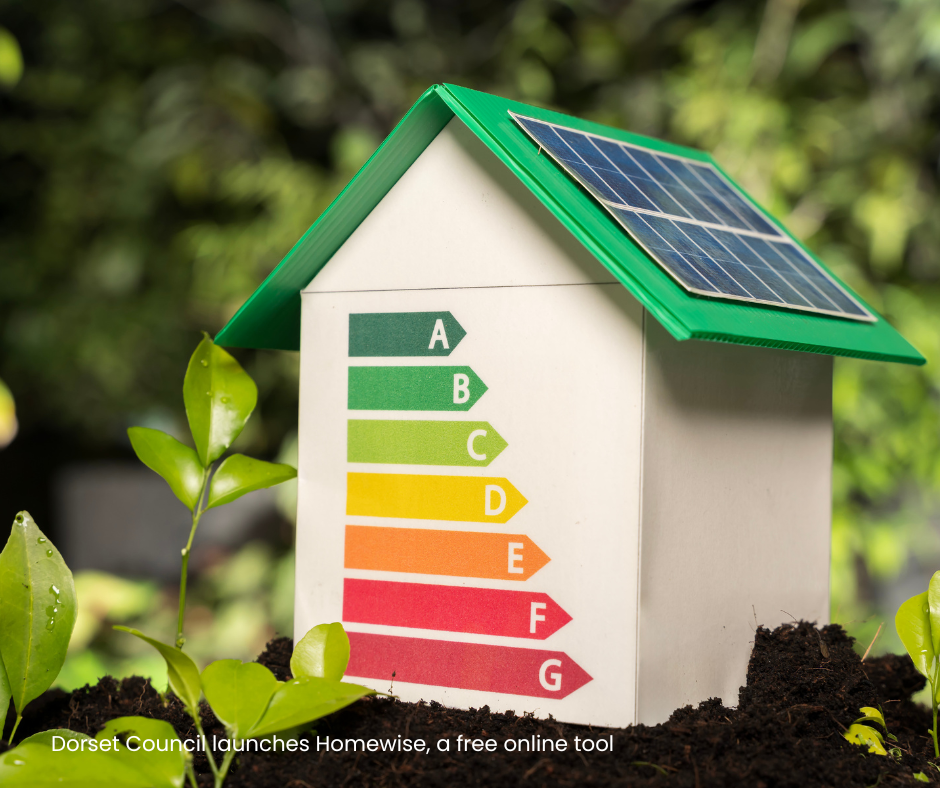
Dorset Council has launched Homewise, a free online tool that helps people in Dorset find the best ways to make their homes more energy efficient.
Created by Energy Saving Trust, Homewise uses expert data tailored to give residents what it claims is clear and trustworthy advice.
To use the service just enter your postcode and answer a few quick questions to get a personalised action plan showing which upgrades, like insulation, LED lighting or solar panels, could make your home easier and cheaper to heat.
For more tips, advice, and support on saving energy at home, go to Home Energy Advice on the Dorset Council website.
26 January 2026
Help us save moths too, pleads Butterfly Conservation Society
The Dorset-based Butterfly Conservation Society (BCS) has today added to its earller plea for councils to declare themselves ‘butterfly friendly’ by now asking for residents to help councils create ‘moon meadows’ to help save moths.
Moon meadows are green spaces free from light pollution.
This follows ‘alarming’ new research* using Met Office data that has found that the number of nocturnal insects such as moths has declined, with areas with more artificial light at night showing lower numbers of insects overall.
It’s the latest in a wave of new research showing the impacts of light pollution and urbanisation on our declining moth populations, said BCS.
The society, famously championed by TV environmentalist Chris Packham, said moths are important indicators of the health of our environment and need help to share their warning signs that things are going wrong.
Claiming lighting is not often part of local biodiversity plans, and sometimes completely out of the control of those working to enhance green spaces, BCS urges local residents to persuade local councils to create ‘Moon Meadows’ to fix this.
It suggests using their Moon Meadow template to ask councils whether their Biodiversity Plan includes tackling the threat of light pollution to save moths.
*the new research using Met Office data.
26 January 2026
Half world’s CO2 emissions come from 32 fossil fuel companies
More alarming news, this time on fossil fuels, also came out last week with a new Carbon Majors report claiming that half the world’s carbon dioxide (CO2) emissions came from just 32 fossil fuel companies in 2024.
Of the top 20 emitters, 17 were state-owned by countries – including Saudi Arabia, Russia, China and the UAE – that opposed the total phasing-out of fossil fuels at December’s COP30 UN climate summit in Brazil.
The top five investor-owned companies were ExxonMobil, Chevron, Shell, ConocoPhillips and BP, which together were responsible for 5.5 percent of the total emissions in that year.
The Carbon Majors database tracks the world’s largest oil, gas, coal and cement producers and calculates the carbon emissions from each entity’s production.
While global clean energy investment now nearly doubles that of fossil fuels, total CO2 emissions continue to rise. Last year, fossil fuel CO2 emissions reached a record high, topping 38 billion metric tons.
23 January 2026
Succession of ‘wake up call’ reports landed last week
A succession of ‘wake up’ calls-to-action reports out this last week have again highlighted the increasing seriousness of the climate and nature crisis by pointing out the danger to the UK from food and water shortages.
First came an uncompromising UK government intelligence report – using military intelligence techniques to examine the biodiversity crisis unfolding worldwide – that found the UK is particularly vulnerable to food supply risk because it is heavily reliant on global markets for food and fertiliser.
Identifying what it called ‘cascading risks’ linked to ecosystem degradation from increases in conflict, migration and fierce competition for resources. the analysis highlighted six ecosystem regions critical to UK interests that are ‘on a pathway to collapse.’ These are the Amazon, Congo, and Boreal forests, the Himalayas, and Southeast Asia’s coral reefs.
The second report, by the UN, highlighted the risks to geopolitical stability posed by increasingly severe global water shortages. According to the report, the world has already entered an era of ‘global water bankruptcy’ from overuse, pollution and climate change harming billions of people.
An accompanying analysis by The Guardian newspaper showed that half of the world’s 100 biggest cities are experiencing high or extremely high levels of water stress, meaning demand is close to exceeding available supplies.
Better news, however, came from the EU that has announced that renewable energy has overtaken fossil fuels in the region’s power generation for the first time.
Solar and wind power generated 30 per cent of the EU’s electricity last year, an annual review by the independent think tank Ember reported, while power plants fuelled by coal, oil and gas generated 29 per cent.
The shift was largely driven by solar growth, which generated a record 13 per cent of the EU’s power, rising to 20 per cent in five countries.
Wind-turbines accounted for 17 per cent of EU power, dropping slightly from last year but remaining in second-place overall. Coal reached a record low, contributing below 10 per cent, mostly in Germany and Poland.
23 January 2026
NEB briefing now available to watch online
The full video presentation of the keynote National Emergency Briefing (NEB), held at Westminster Central Hall in London on the 27 November, is now available online at The National Emergency Briefing.
Eight leading experts, introduced by Chris Packham and chaired by Professor Mike Berners-Lee, gave a concise, high-level and unfiltered briefing on the entire interconnected crisis – including threats to food supply, health, and national security dubbed ‘one of the most important and significant briefings on the climate crisis to be held in Britain.’
They also set out how investing in genuine emergency action will make us better off.
The invitation-only audience of over 1200 included politicians and influential figures from business, culture, faith, sport, and the media. The event was supported by a wide range of institutions including the National Trust, RSPB, Church of England, Exeter University, the Royal Meteorological Society, Royal Society of Biology, and National Education Union.
The National Emergency Briefing
19 January 2026
UK slipping further behind in meeting climate targets to restore nature – OEP
Today’s report by the Office for Environmental Protection (OEP) again warns that the government is likely to miss its legally binding targets to improve the natural environment in England and restore nature.
This latest assessment follows the OEP’s review of January 2025 that found that ‘progress towards improving the environment has slowed with government still largely off track in achieving its legal environmental commitments.’
The latest report, published on 13 January, concludes: ‘The Government remains off track to meet its environmental commitments and its actions now will determine whether or not key targets for biodiversity and the protection of land and sea by 2030 will be met.’
The role of the independent OEP, set up in November 2021 under the Environment Act 2021, is to protect and improve the environment by holding government and other public authorities to account.
For more details of the latest assessment see Progress in improving the natural environment in England 2024/2025
14 January 2026
One to watch out for…
The Climate Change Committee’s independent assessment of UK climate risk is due to report in the next few weeks as the UK’s Fourth Climate Change Risk Assessment (CCRA4).
This is an updated independent assessment led by the Met Office and due to be delivered by June 2026 on the risks from climate change and the potential for adaptation to address them.
14 January 2026
Meet some of the best nature writers at Shaftesbury Book Festival
Shaftesbury Book Festival – a festival of the best nature writing from Britain and abroad – attracts a worldwide audience to come face-to-face with internationally known authors here in Shaftesbury.
This year it’s on from 20-22 March at various venues in the town on the theme of ‘Reading the Land’. For more info see Shaftesbury Book Festival.
14 January 2026
FOOD: Feeding Dorset Partnership joins UK food network
The Feeding Dorset Partnership (FDP) has joined the UK network Sustainable Food Places. It means the Dorset partnership now has access to a national network of people, groups, and organisations working to feed everyone in Britain sustainably.
FDP includes not only people growing, making and selling food but also those who offer training in skills to grow and cook food or run projects offering affordable and emergency food when it’s needed. It’s also for those who advocate and work for more sustainable growing practices and urgent responses to the climate emergency, who promote a better understanding of nutrition and health through diet, and those who run networks to support people in these different areas of work.
For more on the Feeding Dorset Partnership see Feeding Dorset Partnership.
For more national background see the National Emergency Briefing on Food Security
9 January 2026
Poll finds politicians underestimate the level of public support for climate action
A recent BBC poll has found that the great majority of politicians of all parties completely or largely underestimate the concern that most people in the UK have for the lack of action to deal with climate change and the escalating loss of nature and biodiversity.
While there are differences between the parties about how much MPs believe voters care about climate change, the public generally shows significantly more support for climate action and the UK’s net-zero target than most politicians appear to understand or realise.
For those who want to follow more about environmental politics in the UK see What are the prospects for environmental politics in 2026?
8 January 2026
Douglas Adams warned us 35 years ago
A little known book by one of Dorset’s most famous authors with links to Shaftesbury has been highlighted by the BBC this week for its stark warnings about the threats facing the planet from manmade climate change and nature loss.
‘The Last Chance to See‘ by Douglas Adams, best known as the author of the international bestseller ‘The Hitchhikers’ Guide to the Galaxy’, cautioned that the world is on track for mass extinction of the kind not seen for 250 million years.
It was published in 1990 but it was picked out this week (6 Jan) by BBC’s climate editor Justine Rowlatt who commented: ‘Thirty-five years on from the book’s publication, and we haven’t made much progress.
‘There are now an astonishing 172,620 species on the International Union for the Conservation of Nature’s (IUCN) famous “red list” of endangered species. Of those, 48,646 are threatened with extinction.’
He quoted Tanya Steele, chief executive of the World Wildlife Fund (WWF) UK (whose adviser Lucy Young is also an adviser to SuSAC), as warning: ‘We’re the first generation that really knows that we’re destroying the world. But we’re also the last that can do anything about it.
‘We often focus on the loss of individual species but the crisis runs much deeper. Entire habitats – and the ecosystems they support – are disappearing. Those ecosystems contain vast numbers of species, many of which we barely know exist.’
One measure of the scale of the damage comes from WWF’s Living Planet Index, which has tracked the state of global wildlife since 1970. Its latest report shows that, on average, wildlife populations declined by 73% between 1970 and 2020 – a figure Steele describes as ‘a dreadful warning bell.’
Adams died tragically young at 49 in 2001 but his younger half-brother James Thrift became a well known longtime resident of Shaftesbury and is a trustee of The Hitchikers Guide to the Galaxy Foundation.
Douglas Adams’ eye view on conservation:
Douglas Adams had an offbeat way of explaining why we humans so often fail to take the natural world seriously. As he put it during a 2001 lecture, shortly before his death: “Imagine a puddle waking up one morning and thinking, ‘This is an interesting world I find myself in – an interesting hole I find myself in. Fits me rather neatly, doesn’t it? […] Must have been made to have me in it!’”
As the sun rises and the air warms, the puddle shrinks. But it remains convinced the world – its hole – was designed specifically for it, even as it finally disappears altogether.
Adams believed we behave much like that puddle, comfortably assuming the world was made with us in mind. But he warned this was a dangerous delusion and that unless we recognise that human civilization depends on biodiversity ‘we will continue to destroy it in the way we’ve been destroying it, because we think we can do no harm’.
8 January 2026
THE CIRCULAR ECONOMY: Invitations out to new Dorset summit on recycling waste
Anyone interested in promoting a circular economy in Dorset by reducing waste is being invited to a brand new event taking place in Dorchester next week.
The first Litter Free Dorset Summit 2026 – on Wednesday 14th January at the Shire Hall Museum in central Dorchester – is aimed at ‘bringing together environmentalists, local authorities, community groups and organisations to share ideas and skills, make new connections, and find real solutions to the environmental challenges we face.’
The donation only day-long event, organised by Dorset Climate Action Network, includes a range of expert speakers and interactive workshops to ‘explore implementing circular economy solutions in Dorset.’
If you are interested in attending, you can book your tickets via Eventbrite where there are also details of the speakers, how to get there, parking information and timings. For information on the venue see Shire Hall Museum.
6 January 2026
For older posts go to Sustainable Shaftesbury Archived News
Sustainable Shaftesbury Advisory Committee
Sustainable Shaftesbury Advisory Committee (SuSAC) is a formal committee of Shaftesbury Town Council that operates through a series of working groups. It meets monthly and its meetings are open to the general public.
Upcoming meeting dates, along with the minutes from past meetings are available on the Sustainable Shaftesbury Advisory Committee (SuSAC) page.
SuSAC working groups
The working groups are now reviewing their relevant parts of the Sustainable Shaftesbury Action Plan 2024-2031. Please contact the named leads c/o Shaftesbury Town Hall if you have your own suggestions for improvements. (Nov 2025).
Biodiversity/Nature Friendly Town/Orchard Town: Amber Harrison (co-lead), Jen Hirsch (co-lead), Lucy Young, Mike Cummings, Bernard Ede, Joe Hashman, Sue Clifford, Angela King, Gideon King, John Nelson, Christina Strickland, Richard Thomas
Green Wheel sub-group: Sue Clifford (co-lead), Angela King (co-lead), Mike Cummings, Bernard Ede, John Nelson, Christina Strickland, Richard Thomas, Lucy Young
Circular economy: In partnership with Shaftesbury & District Chamber of Commerce.
Clean air & dark skies: Vacant
Food: Lucy Young (lead)
Energy & retrofitting: Jennifer Morisetti (lead), Richard Thomas
Health & wellbeing: Vacant
Local transport & footpaths: John Nelson (lead), Joe Hashman (Shaftesbury Rights of Way volunteer warden)
Planning: Mike Cummings (lead), Bernard Ede, Chris Maude, Richard Thomas
Waste & recycling: Vacant
Water (rivers, streams and ponds): Mike Cummings (lead), John Nelson
Community worksheds: Cllr Lester Dibben (lead)
All working group leads welcome input from anyone in the community with an interest in the subject who would like to help develop ideas and make positive things happen. Contact is c/o the Town Hall office@shaftesbury-tc.gov.uk
Partners of Sustainable Shaftesbury: Butterfly Conservation, Cranborne Chase National Landscape, Dorset Wildlife Trust, National Trust in Dorset, Dorset CPRE, Dorset Climate Action Network, Great Big Dorset Hedge Project, Hilltop Litter Pickers, Planet Shaftesbury, Shaftesbury Arts & Culture Advisory Committee, Shaftesbury Home Grown, Shaftesbury Neighbourhood Plan Advisory Committee, Shaftesbury Tree Group.