
“Think Global, Act Local”
OUR VISION is a future where Shaftesbury is able to meet the challenges of a changing world under threat from climate change and nature loss by recognising that a healthy natural world is the cornerstone to humanity’s very survival as well as human health and happiness.
OUR MISSION is to work with the local community to address and adapt to the climate and nature emergency through a comprehensive plan of action to reduce greenhouse gas emissions and protect and restore nature, working towards a resilient future for Shaftesbury residents and the planet.

For details of the Action Plan please click on the following headings:
Vision Statement and Masterplan
Appendix B: Biodiversity Checklist
Appendix F: Open Spaces Management Plans [in progress]
Appendix G: Useful links/references/leaflets [to be added]
Useful Information:
Carbon Footprint Impact Report – Shaftesbury Town
Are you interested in finding out more about protecting our natural environment, climate and ecology? Have a look at our Shaftesbury Orchard Town and Glyphosate and Bee Friendly pages. Dorset Council has news and resources on their website. You can also sign up to their newsletter and select Climate and Nature to receive a round up of climate news from Dorset Council.
For more on Sustainable Shaftesbury and how it works, please scroll down past News Updates.
News updates
Keep up-to-date with climate change and nature recovery news in Dorset. News reports and views are from the Sustainable Shaftesbury Advisory Committee (SuSAC). All reports are free to be reproduced or quoted from.
ENERGY: North Dorset again misses out on EV technology rollout across Dorset
New residential on-street charging infrastructure being installed by Dorset Council to support Dorset residents who want to switch to an electric vehicle (EV) but do not have access to off-road parking is again being concentrated in the south of the county.
Working with chargepoint operator Connected Kerb, Dorset Council is to install more than 2,250 charging sockets at over 300 locations across Dorset over the next five years. But all the chosen locations are along the south coast.
The council recently announced that electric scooter trials in Dorset would also be focussed only on south coast towns.
The first wave of installations is planned for residential areas in Weymouth, Portland and Chickerell with further locations, including Swanage, Lyme Regis, Charmouth, Beaminster, West Bay and Bridport, expected to form part of the next stages of the programme.
The council says that before plans are finalised it is holding local information sessions for residents and councillors in the areas identified for chargepoints to follow events that have already taken place in Chickerell and Portland.
Dorset Council says that while the information sessions are mainly for residents who may have chargepoints installed on their street, everyone is welcome to attend.
‘Whether you would like to learn more about the programme or are simply curious about EVs, come along and find out more,’ said a spokesperson.
To find out more go to the EV information section and ‘Residents’ questions answered’ pages on the Dorset Council’s website.
12 August 2026
NATURE: CPRE wants to make September ‘Love your countryside’ month
The CPRE is hoping to bring thousands of people together in September for its ‘Love Your Countryside’ campaign as part of its 100th anniversary celebrations.
It says the hope is that people will come together to share ‘inspiring stories, local walks and shared experiences, celebrating the places that shape our lives and the many different ways we connect with them.’
The CPRE says this is ‘because the countryside people love is the countryside they’ll want to protect.’
It adds this means ‘not just the famous places’ but ‘the extraordinary ordinary, the footpath you’ve walked for years, the view that tells you you’re nearly home, the places where community and countryside meet.’
CPRE campaign lead Verity Warne says that CPRE branches across England will also be hosting walks and events as part of Love Your Countryside, ‘giving you the chance to discover new places, meet other countryside lovers and celebrate the landscapes that matter to your local community.
‘We’ll also be inviting everyone to share the places they love, the walks they enjoy and the moments that help them see the countryside differently using #LoveYourCountryside.
‘Together, we’ll celebrate the countryside and inspire more people to value and care for the places that matter to us all.’
She says details of walks near you will be part of the campaign. To join in the celebration go to:
12 August 2026
CLIMATE: Latest initiatives to help town councils launched by umbrella body
In a number of important initiatives this month for town and parish councils working to combat climate change and nature loss, the National Association of Local Councils (NALC), the umbrella body for town and parish councils in England, has:
- written to Dame Angela Eagle MP, Secretary of State for Environment, Food and Rural Affairs (DEFRA),calling on the government to place parish and town councils at the heart of environmental policy, recognising the vital role they play in tackling climate change and supporting nature recovery. See the full letter here: NALC calls on government to put parish and town councils at the heart of environmental action.
- responded to the government’s consultation on permitted development rights, supporting stronger planning protections for community assets while calling for parish and town councils to remain at the heart of local planning decisions. Read NALC’s full response here: NALC backs stronger planning protections for community assets and local decision-making
10 August 2026
FOOD: The Feeding Dorset Partnership wants your views on what’s possible in Dorset for a major funding bid
How we create a healthier, fairer and more resilient food system for Dorset is the question at the heart of the latest Feeding Dorset Partnership webinar, launched last week as the precursor for a major funding bid to the multi-million Climate Action Fund (CAF).
Bringing together people from across farming, food, health, communities, business, education and the voluntary sector to explore the opportunities presented by the fund, the webinar introduces the seven cross-cutting themes that have emerged through the work of the partnership so far.
Together they claim to provide a shared framework for developing ambitious projects that can improve health, strengthen local food production, protect nature, reduce waste and build thriving communities across Dorset.
The National Lottery’s Climate Action Fund (CAF) Food Systems programme offers grants ranging from £2.5-£7 million for regional partnerships across the UK. Local organisations like the Feeding Dorset Partnership and Dorset Climate Action Network are actively developing a collaborative bid under this framework to transform Dorset’s local agriculture and food systems.
For standard partnership projects under the broader CAF stream, individual grants start at a minimum of £500,000.
The partnership is now inviting people to watch the webinar (see below) and let them know not only what you think about it ‘but also what is possible if we work together at a scale we’ve not yet achieved.’
It asks: ‘What ideas could transform Dorset’s food system? What projects would only become possible if organisations, businesses, communities and residents combined their knowledge, skills and resources?’
So whether your ideas are large or small, strategic or practical, the Dorset Food Partnership says it would like to hear them to help frame its major funding bid to CAF.
‘We’re looking for ambitious, collaborative project ideas that could make a lasting difference to Dorset’s food system—ideas that bring together communities, businesses, farmers, charities, public organisations and residents in new ways,’ it says.
To watch the webinar and to complete the survey – From Big Ideas to Lasting Change: Help Shape Dorset’s CAF Bid
Or you can email your ideas to feedingdorset@helpandkindness.co.uk or go direct to the survey at Theme Development for the Feeding Dorset National Lottery Climate Action Fund Bid.
The survey is open until Sunday 23 August.
10 August 2026
ENERGY: Free tool to reduce energy bills now available to local residents
Whether you’re looking to reduce your energy bills, make your home more comfortable, or explore improvements such as insulation, heating upgrades or solar panels, a free tool to help you decide what’s best is now available to Dorset residents.
Recommended by Dorset Council, the tool – called Homewise – claims to provide personalised, impartial advice based on your home and budget.
By answering a few questions homeowners receive a tailored action plan showing improvements that could work for you, along with estimated costs and potential savings.
The charity Energy Saving Trust is also asking to hear about the experience of those who’ve already used Homewise and found it helpful. Some users may be invited to take part in a short phone call and contribute to a written or filmed case study to help others make informed decisions about improving their homes.
As a thank you Energy Saving Trust will give selected participants a £100 voucher. If you’re interested, contact climate@dorsetcouncil.gov.uk.
To find out more go to Home energy advice – Dorset Council.
6 August 2026
TRAVEL: Could Dorset e-scooter rollout trial help Shaftesbury?
The Government-backed e-scooter trial operating in the south of Dorset has raised the question of whether such a scheme could work in the more isolated rural areas in the north of the county such as Shaftesbury.
The trial, now taking place in Weymouth, Portland, Dorchester, Corfe Mullen, Upton and Lytchett Minster until next year, is seen as help to inform future national Government legislation as well as an opportunity to explore new ways of making short journeys without relying on the car.
Leader of Dorset Council Nick Ireland said: ‘With many local trips being less than five miles, e-scooters could play a role in reducing congestion and carbon emissions while giving people another travel option (and) I will be interested to see what residents think of the scheme.’
6 August 2026
CLIMATE: National TV debate on the climate and nature crisis ‘essential’, says climate expert
Leading climate scientist Professor Mike Berners-Lee has told an online audience of 5,000 that Britain now has to work towards achieving ‘a cultural and social tipping point’ if it is to prevent the worst effects of the climate and nature crisis.
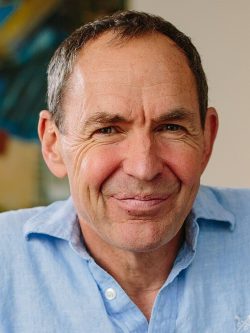 Speaking at the start of the National Emergency Briefing (NEB) campaign’s latest update on 31 July, Prof Berners-Lee said that the climate and nature activism movement has to convince a majority of the voting British public to put maximum pressure on MPs and local councils to get the Government to take more urgent action.
He said it’s no longer a case of working to mitigate what is coming, essential though that still is, so much as the need to adapt to what is now inevitable and to develop resilience in dealing with it.
Prof Berners-Lee, of Lancaster University, is one of those leading the call for a national televised debate on the climate and nature crisis to put what he defined as ‘the certifiably accurate scientific facts’ in front of people.
The call for a televised debate on the issue is now supported by almost 150 MPs of all parties, including all but one of Dorset ‘s eight MPs. It includes North Dorset MP Simon Hoare.
You can watch the full hour-long NEB update on You Tube
Big Update Webinar – National Emergency Briefing. | 31 July 26
Plus…
NEB student programme now accepting sign-ups
Following a ‘hugely successful’ pilot using the People’s Emergency Briefing film, the NEB’s new schools initiative has now gone live. Working with Coombe Dean School in Plymouth, the initiative includes a dedicated resource pack for 16–18 year-olds ahead of the new school year in September.
The NEB says its aim is ‘to help young people understand that they have a real voice in local and national politics, and to give them confidence to play an active role in shaping the future.’
It asks the video is shared with teachers, sixth forms, colleges and anyone working with 16–18 year olds.
Schools are also being asked to sign up for a preview prospectus for the NEB Student Programme. By signing up on the last slide the NEB campaign says schools will receive the full lesson programme when it’s released in August.
5 August 2026
Dorset residents urged to support Chris Packham climate petition to Parliament – now also supported by local MP Simon Hoare
Dorset residents are being urged to support a petition to Parliament started by TV naturalist Chris Packham calling on MPs to debate the demand for a national televised debate on the National Emergency Briefing about the climate and nature crisis.
More than 44,000 people nationwide have signed Packham’s petition nationwide but the petition needs to reach 100,000 to trigger an automatic debate in Parliament.
Meanwhile, North Dorset MP Simon Hoare is among 137 MPs of all parties who have signed an Early Day Motion in Parliament calling for the same thing and many MPs are now urging people to add their support.
Surprisingly few people in Dorset – in an area that purports to be heavily climate and nature crisis aware – have so far signed the petition in spite of the People’s Emergency Briefing, the 50-minute film based on the headline-making NEB conference in London last November, getting widespread viewings across Dorset.
At 1 August, 800 Dorset people had supported the Packham petition of whom only 117 were from North Dorset. The counts in other Dorset areas were:
184 from West Dorset
139 from South Dorset
106 from Mid Dorset and North Poole
254 from Bournemouth, Christchurch and Poole
To see the petition and read the background to it go to: Hold a UK-wide briefing on climate and nature risks
3 August 2026
CLIMATE: Wildfires will be worse next summer, forecasts climate expert
Co-director of the Climate Majority Project Dr Rupert Read has said that the wildfires breaking out all over Britain now are ‘very sadly exactly the kind of event we now have to expect as climate breakdown accelerates.’
Speaking in East Anglia today (30 July), Dr Read, an environmental philosopher and a former professor at the University of East Anglia, forecast that next summer will ‘almost certainly be worse.’
He said the current spate of wildfires ‘is only the beginning.’
‘Next summer will almost certainly be worse. Making ourselves safer begins with citizen vigilance. But it doesn’t end there.
”We need to act as a high priority to make ourselves safer against this sort of thing now, across East Anglia and far beyond.’
Dr Read is the latest climate expert to forecast severe heatwaves affecting most the planet in 2027, including the UK, from climate change and the ‘super El Nino’ now building in the Pacific region.
Experts have already said that Europe is the fastest warming part of the planet and that Earth has already reached the first 1.5 degree ‘tipping point’ increase in mean global temperature not meant to have been reached for several more years yet.
31 July 2026
PLANNING: Crucial Dorset Local Plan delayed again – until 2029
Local environmentalists are concerned that despite Dorset Council’s cabinet yesterday (28 July) adopting Shaftesbury’s latest Neighbourhood Plan up to 2031 the town is still not properly protected from large scale housing development.
This is because Government changes to national planning laws means that Dorset Council’s cabinet also yesterday agreed that it has no option than to put back the adoption of the revised Dorset Local Plan for another two years.
The Local Plan was due to be adopted by the end of 2027 but it is now not due for adoption until some time in 2029.
Because it’s the Local Plan that largely controls what is allowed to be built in Dorset and where it means that national housing developers have another three years of relatively unrestricted development opportunity.
Dorset’s failure to have a current Local Plan also raises questions about how effective a neighbourhood plan for Shaftesbury can be in practice.
‘We have spent several years preparing a Local Plan for Dorset, supported by extensive technical studies and feedback from more than 9,000 consultation responses,’ said a Dorset council spokesperson.
‘However, while that work was underway the Government introduced a new plan-making system, effectively doubled Dorset’s housing requirement, and set a December 2026 deadline for plans being prepared under previous arrangements.
‘These changes, together with further evidence and assessment work needed to ensure the plan is sound, mean it is no longer possible to complete the current Local Plan under the old system.’
29 July 2026
TRAVEL: Dorset’s latest Rights of Way plan now out for consultation
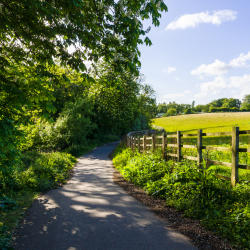
A 10-year Rights of Way Improvement Plan for Dorset is now out for public consultation and wants your comments and suggestions for improvement.
Launched last week by Dorset Council, the council says the plan is looking to improve access to a network of Rights of Way (RoW) such as public footpaths to make them more connected and easier for people to use for recreation, active travel and everyday journeys.
Shaftesbury already has an ambition to create a safe cycle and pedestrian route between Shaftesbury and Gillingham station via Motcombe along an existing bridleway already running between Gillingham and Motcombe.
SuSAC’s travel and footpath lead John Nelson has suggested a network of safe cycle routes linking all local towns should be created on the same lines as the North Dorset Trailway linking Blandford with Sturminster Newton along the old railway line (see https://www.northdorsettrailway.org.uk/).
A public right of way in England is a legally protected path crossing private land that anyone has the right to use. The four main types are footpaths, bridleways, and byways.
Types of Public Rights of Way (RoW)
- Footpaths: For walkers, runners, mobility scooters, and wheelchairs only (marked with yellow arrows).
- Bridleways: For walkers, horse riders, and cyclists (marked with blue arrows).
- Restricted Byways: For walkers, horse riders, and non-motorized vehicles like horse-drawn carriages (marked with purple arrows).
- Byways Open to All Traffic (BOATs): For all types of transport, including cars, though mainly used by walkers and riders.
Starting on 21 July, the Dorset consultation runs for three months to 12 October 2026. The final plan is intended to cover the years 2026-2036.
The link to the consultation is Dorset Rights of Way Improvement Plan (ROWIP) Consultation – Dorset Council – Citizen Space
29 July 2026
ENERGY: UK faces possible power cuts from ‘surge in renewables’
The Times today (Sat 25 July) reports that whistleblowers within the National Energy System Operator (NESO) are claiming that the UK faces increased risk of power cuts because of the current surge in wind, solar and batteries.
The report, from Cornwall Insight, claims that NESO and the Department for Energy and Net Zero (DESNZ) are both secretly aware that the current surge in renewable energy sources is making the UK energy system less secure and increasing bills.
This, say whistleblowers, is because NESO cannot see or control the amount of renewable energy coming into the system so NESO is effectively ‘flying blind.’
NESO is the independent, publicly-owned body that plans and runs Britain’s electricity and gas networks. Launched in October 2024, it took over from the old Electricity System Operator to help the UK reach clean power goals.
NESO is not the same as the National Grid though it was created from a part of it. It’s an independent public corporation owned by the government, whereas the National Grid plc is a private investor-owned multinational electricity and gas utility company.
27 July 2026
CLIMATE: Changes happening in the Atlantic could change our seasons, warn scientists
It’s not just climate change and global warming we have to worry about, say scientists in a new study. It’s what’s happening in the north Atlantic.
The Atlantic Meridional Overturning Circulation, or AMOC – a vast, north-south system of currents that carries warm surface water towards the Arctic and returns colder water thousands of miles south through the deep ocean – is weakening, say scientists.
And if it weakens enough, which it is now forecast to do this century, it could change not only our weather but also our seasons in drastic ways we’re not ready for – with ice cold winters and dry hot summers, much more severe than we’re having now.
The UK’s climate is already milder than it should be for our latitude because of the warming effect of the south west to north east flow of the Gulf Stream from the Caribbean. But all that could change, and it could change quickly.
Prof Stefan Rahmstorf, of the Potsdam Institute for Climate Impact Research and one of the world’s leading experts on the AMOC, is just one of many scientists monitoring the AMOC now saying the paleoclimate evidence shows that rather than climate change happening smoothly it’s more likely to be ‘in some jumps and jolts and non-linear effects’.
How fast and by how much the AMOC is weakening is now under close scientific investigation in the North Atlantic – but the threat is already acknowledged by the Government that’s on record as saying that as ‘a key component within the Earth’s climate system’ the AMOC contributes to the UK’s long-term climate risks.
It’s a research programme scientists are taking an ever-increasing interest in and humanity will soon be watching with ever-closer interest.
22 July 2026
Calling all nature-lovers! Volunteer at the Gillingham & Shaftesbury Show
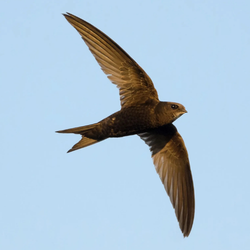
Are you interested in our swifts, hedgehogs, bats, bees, butterflies, wildflowers and anything else you care to name in the natural world?
Then you might be interested in volunteering to help at SuSAC’s joint stall with Planet Shaftesbury at the Gillingham & Shaftesbury Show on Wednesday 19 and Thursday 20 August at the Motcombe Turnpike showground.
It’s particularly important this year because not only are we again partnering with Dorset Climate Action Network and Sustainable Dorset but we are also linking with Dorset Wildlife Trust (DWT) that’ll have a stall right next to us and has just launched its major Lottery-funded Nature Connection North Dorset project.
So not only is there a lot on for you to catch up on and find out about, but also it’s a great opportunity to chat about your own interest in whatever nature subject interests you.
We’re looking for volunteers to do one or more two-hour shifts on the stall on both days in return for a complimentary ticket to the show.
To volunteer email the town hall at office@shaftesbury-tc.gov.uk, mark your email for the attention of Richard Thomas and he’ll get right back to you.
22 July 2026
RESEARCH: Climate Coalition recommends reliable info sources
To recommend reliable sources of information and to counter what it claims is the increasing amount of mis- and disinformation about climate change and nature loss being spread by climate change deniers and vested interests, the long-established Climate Coalition has published a list of what it considers are reliable online sources on the issues.
It recommends Carbon Brief and the Energy and Climate Intelligence Unit (ECIU) for technical information and for campaigning information they recommend growing campaign groups such as Uplift, Climate Emergency UK and Possible.
The Climate Coalition (TCC), set up in 2005, is the UK’s largest group of people and organisations dedicated to tackling climate change as an umbrella organisation comprising over 130 members including the National Trust, Women’s Institute and Oxfam among others.
It focuses on national campaigning and political lobbying and is best known for organising the annual Great Big Green Week in June.
It partners with but is separate from The Great Collaboration, a UK-wide initiative and toolkit set up in 2019 that partners primarily with parish, town, and county councils to help communities take practical, bottom-up action on climate change.
17 July 2026
TRANSPORT NEWS: In the last week Dorset Council has reported on two major transport initiatives it is taking to improve community transport in the county
Improving public and community transport a ‘must’
Dorset Council is exploring how public bus services and community transport could work better together to improve journeys for residents across the county.
Starting now and taking place over the coming months, the work is seen as a ‘must’ to radically improve how public and community transport works in Dorset.
The council says its first step is to help councillors review the current system and consider options for the future with a new reporting system known as an Outline Business Case (OBC). OBCs are used to understand challenges and look at possible solutions before any decisions are made.
Beginning with the council’s Place and Resources Overview committee on 9 July, the council has now started gathering feedback on what it calls its business case over the coming months.
Cllr Jon Andrews, Dorset Council’s cabinet member for Place Services, said: ‘We know transport is a real concern for people across Dorset, especially in our rural communities.
‘This report is about taking a step back and looking at how we can make things work better for the future. It’s early work, and no decisions have been made.
‘We want to build a system that helps people get where they need to go more easily, whether that’s work, school, healthcare or seeing family and friends.
‘As part of our commitment to address the climate emergency it’s also our goal to reduce reliance on the car but to do that we need to have a better public transport offer.’
Options being explored include better coordination between services, more flexible local transport, and support for people to travel independently where appropriate.
Buses would remain the core of the network, with other services helping people reach main routes and key destinations.
The full business case will go to the council’s Cabinet in the autumn.
You can read the outline business case and report going to Place and Resources Overview committee here.
Improving car parking review is a ‘first’
Dorset Council is reviewing how it manages its car parks with early proposals aimed, it says, at ‘making parking fairer, safer, greener and easier to use for residents, businesses and visitors.’
The council claims the review is the first time it has used detailed data to understand how parking works across the whole of Dorset.
The review covers more than 80 council-run car parks and associated on-street parking, helping the council build ‘a clearer picture of where spaces are in demand and where they are underused.’
The council says no decisions have been made yet but preliminary findings show ‘a clear imbalance’ across Dorset, with some town centre and coastal car parks being well-used, particularly in busy periods, while other car parks often remain largely empty.
The council is sharing early ideas with councillors, starting on 9 July with its Place and Resources overview committee, before developing more detailed proposals.
No timetable for the review has been given but Dorset Council says town and parish councils, as well as business groups, will be invited to share their views as the council’s future parking strategy develops.
You can view the report going to Place and Resources Overview committee here.
Dinah’s Hollow ‘half way’ to being reopened
Dorset Council highways reports it is ‘half-way through’ its year‑long project to stabilise the slopes at Dinah’s Hollow to prevent landslips on the C13 between Shaftesbury and Blandford. The reshaped hollow is on schedule to reopen at the end of 2026.
13 July 2026
NATURE RECOVERY: DWT launches major new nature recovery programme in Shaftesbury
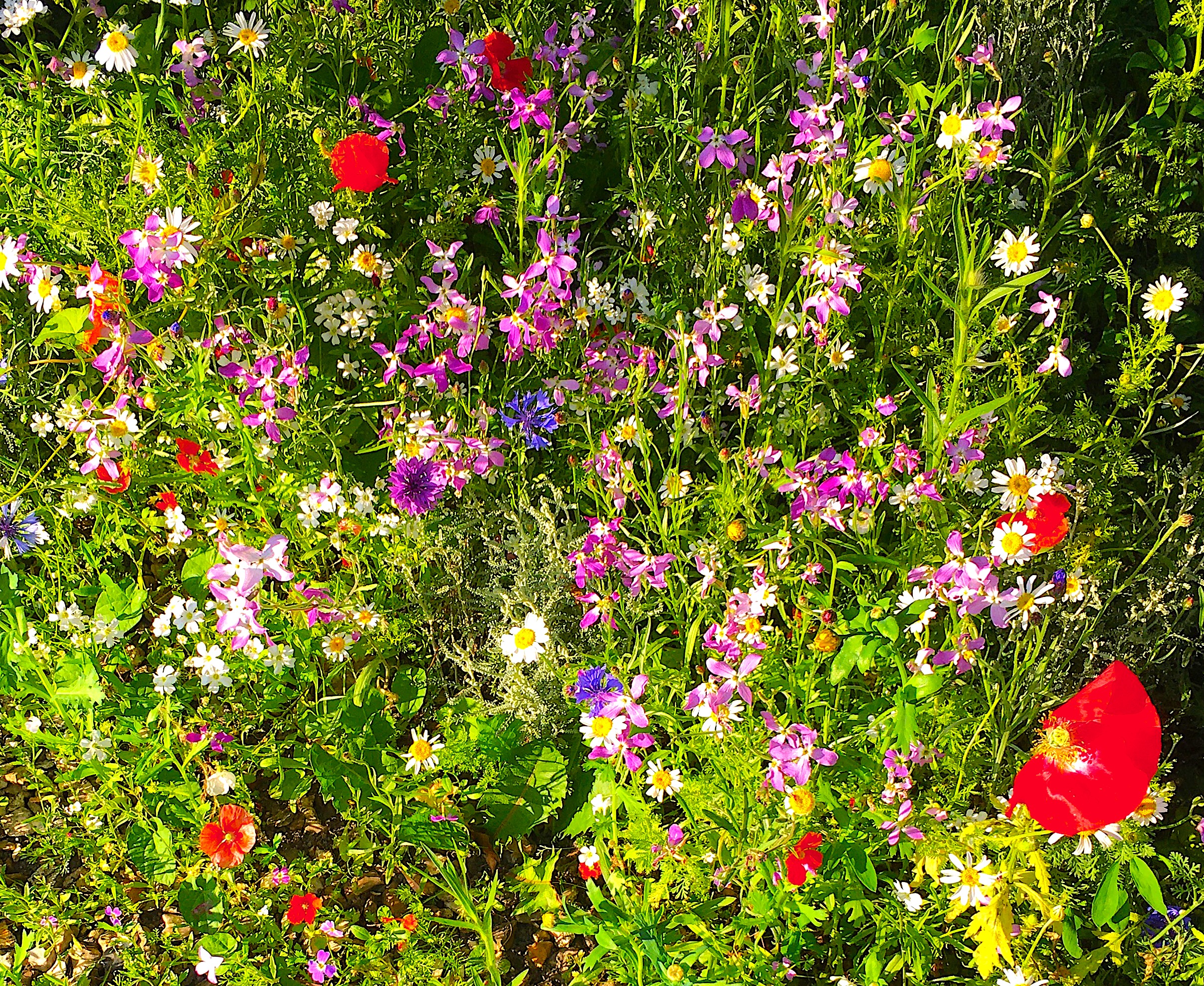
Dorset Wildlife Trust has encouraged Shaftesbury to put forward two trial activities and ideas for green space improvements under its major new Heritage Lottery-funded Nature Connection North Dorset (NCND) project to help raise public awareness in nature recovery and leave a legacy of ‘thriving wildlife and communities’ in the town over the next six years.
This followed the project’s Shaftesbury launch on 30 June when the DWT’s Nicki Brunt and Sophie Headdon outlined the aims and objectives of the NCND project to members of Sustainable Shaftesbury Advisory Committee (SuSAC) and Planet Shaftesbury at the town hall.
After discussion of a long list of suggested projects for nature enhancement in the town, it was decided to start by recommending one small and one larger scheme to ‘trial’ the town’s interest in the subject.
It is hoped that by coming up with some relatively straight forward ideas for trial activities and nature connection during DWT’s year-long development phase – that runs to next spring – it will provide enough evidence for DWT to qualify for almost £1 million of Heritage Lottery funding for a full five year delivery phase of many more nature-based projects to 2032.
If successful, the delivery phase will provide an annual community grant pot of £25,000 a year, for communities across North Dorset. The project would also provide traineeships, training, events and support for community groups.
In Shaftesbury, it’s being suggested some activity is particularly focussed on SuSAC’s all-encompassing Green Wheel project for a protective nature-rich habitat around the town – with wildlife corridors or ‘spokes’ feeding into and out of the town centre along footpaths, bridleways, hedgerows and trees – to boost the town’s recent declarations of becoming an Orchard Town and Nature Friendly Town that already has the support of the Town Council and Dorset Council.
For more information on the NCND project email Sophie Headdon at SHeaddon@dorsetwildlifetrust.org.uk
For how to make your garden nature friendly go to DWT’s Wilder Communities team at wildercommunities@dorsetwildlifetrust.org.uk or find resources at Wildlife-friendly gardening | Dorset Wildlife Trust.
For updates on the NCND project in the Shaftesbury area keep watching this space.
The Nature Connection North Dorset is a new project from Dorset Wildlife Trust being developed thanks to funding from the National Lottery Heritage Fund that supports projects that connect people and communities with the UK’s heritage. The project is now in its development phase with the aim of full delivery over five years from July 2027–June 2032.
10 July 2026
NATURE RECOVERY: The Great Big Dorset Hedge project comes to Shaftesbury
Volunteers from the Great Big Dorset Hedge (GBDH) project are coming to Shaftesbury in July to survey two farms in the area as part of its countywide campaign to regenerate Dorset’s hedgerows.
A survey team will be at Cherry Orchard Farm just to the west of Shaftesbury on Friday 3 July and at Brinscombe Farm on Tuesday 21 July.
The GBDH project, led by retired West Dorset farmer John Calder, is carrying out hedge surveys on 27 farms throughout Dorset in July and the project is looking for more volunteers in the Shaftesbury area.
The project has recently appointed former Dorset NFU county adviser Dirk Russell, who has ‘established strong professional relationships with scores of farmers all over the county’, to lead its work in North Dorset.
To find out more and to volunteer go to www.dorsetcan.org/hedge/volunteer.
1 July 2026
PLANNING: Dorset CPRE’s major planning conference recordings now online
Recordings of Dorset CPRE’s major 2026 webinar last month on the challenge of delivering for nature and the environment within Dorset’s planning and development strategy are now available online via its 2026 Planning Conference webpage. They will also shortly be added to CPRE’s YouTube Channel.
A summary of the main points from the conference on ‘Getting the balance right between Dorset’s housing, nature and the countryside’ will also feature in Dorset CPRE’s July newsletter.
A highlight of the online event, chaired by CPRE’s national CEO Roger Mortlock, was the forthright presentation ‘A watery perspective’ by Matt Wheeldon, Wessex Water’s infrastructure development director, who pleaded powerfully for a more common-sense and sustainable approach to the use of water on both new and existing development ‘so mankind can tread more lightly on planet Earth’.
1 July 2026
EDUCATION: Government consults on new natural history GCSE qualification
The Government is asking the public to have their say on the new natural history GCSE it announced last month (12 June) it is to introduce into the national curriculum ‘to grow the next generation of green careers.’
Biodiversity, conservation and ‘human influences on the natural world’ are among the proposed study subjects.
From 2029, 16-19 year-olds will also be able to study a ‘V Level’ in agriculture, environmental and animal care, aiming to give them both hands-on experience and an opportunity for further study of the natural world.
But first the Government wants to know what you think of the subject content of the new qualification. A nationwide consultation has begun and closes on 4th September.
1 July 2026
Meet Dorset Wildlife Trust’s new Nature Connection North Dorset project officer SOPHIE HEADDON:

‘Hello, my name is Sophie and I am the new project officer on the Nature Connection North Dorset project with the Dorset Wildlife Trust.
‘I have recently moved from Devon where I worked with the National Trust on a nature connection community project, and have previously undertaken traineeships with the rewilding site ‘Ambios’ and the RSPB.
‘I have a love for all things nature with particular interests in botany and birds. I also have enjoyed previous roles in the arts, heritage and higher education sectors in comms, curating and project coordination. I am looking forward to meeting everyone in Shaftesbury!’
Dorset Wildlife Trust (DWT) recently won support from The National Lottery Heritage Fund for its Nature Connection North Dorset project. Focussing on the five market towns of Shaftesbury, Gillingham, Blandford, Sturminster Newton and Sherborne, the project seeks to support communities to take the lead in restoring nature to their local places.
An initial £142,176 development phase is intended to lead to an application for £970,822 further funding for a full five-year project at a later date.
‘The project aims to help communities reconnect with nature and take restorative action in a corner of Dorset where natural habitats are more degraded and special wildlife sites scarce,’ said Sophie who can be contacted on sheaddon@dorsetwildlifetrust.org.uk.
Sophie will be meeting members of SuSAC and Planet Shaftesbury to introduce the project and discuss ideas for Shaftesbury on 30 June.
26 June 2026
‘Astonishing’ nature reserve success story shows what the Green Wheel project can achieve here
News that a piece of barren land in north Dorset has been transformed into a nature haven for people and wildlife, including the rare Greater Horseshoe Bat, has shown what is possible in Shaftesbury also with the Green Wheel project.
An extension to the Milldown Nature Reserve, on the Shaftesbury side of Blandford, has been carefully designed to support biodiversity, with a particular focus on providing habitats for moths, beetles and spiders – the main prey for the Greater Horseshoe Bat.
Now flourishing as a chalk downland meadow, the 13-hectare reserve boasts a rich variety of habitats and landscape features, supporting an abundance of flora and fauna.
Dorset Council, with support from Cranborne Chase National Landscape Farming in Protected Landscapes programme (FiPL), bought the land over three years ago from a local landowner and has since transformed it into a wildlife wonderland.
Now thanks to the dedicated efforts of Dorset Council Rangers and community volunteers with financial contributions from developers and the council the land is said to be thriving.
Dorset Council leader and cabinet member for Climate and Nature Cllr Nick Ireland said: ‘I’m astonished at the transformation of this site – going from a wildlife desert to a wildlife oasis.
‘This area is now bustling with wildlife, which is testament to all of the hard work our teams have done, along with volunteers, to create a beautiful haven.
‘The extension has increased public access to nature by expanding the existing, widely used Milldown Nature reserve as well as create educational opportunities and a space for health and wellbeing on the edge of Blandford Forum.
‘This work demonstrates how the council is playing a leading role in helping nature to recover, fulfilling the aims of the Local Nature Recovery Strategy (LNRS) and our corporate climate and nature priority.’
Community involvement has been central to the project’s success. During Winter 2023, more than 120 volunteers joined the Greenspace Ranger Team to plant over 3,000 native hedgerow whips, plus 70 trees, donated by residents of Blandford. These provide essential food sources such as nuts, berries and nectar for wildlife.
Linda Nunn, director of Cranborne Chase National Landscape added: ‘Located within Cranborne Chase National Landscape (CCNL) and adjoining Dorset National Landscape, Milldown Nature Reserve plays an important role in connecting habitats and building ecological resilience across the wider landscape.
‘Through the FiPL programme we’ve been pleased to support both its acquisition and ongoing improvements and it’s fantastic to see the benefits already emerging for wildlife and people.’
Ongoing monitoring will help track the site’s development, with bat and moth surveys planned for the summer. Wildflower surveys will also be carried out as the meadow continues to evolve and new species emerge and flourish.
More about how Dorset Council is tackling Dorset’s nature recovery crisis is on their website – Dorset’s local nature recovery strategy.
22 June 2026
Reports from Dorset Council
The following items are from a report provided to a meeting of Shaftesbury Town Council on 16 June 2026 by Dorset councillors Jack Jeanes and Derek Beer:
Dorset flood recovery and resilience programme
Dorset Council has launched a £9.25 million programme to repair damage and strengthen resilience following significant flooding in winter 2025–26, including funding for drainage clearance and targeted infrastructure works in affected areas.
The council plans to carry out detailed flood investigations and local reviews in partnership with communities to understand causes, clarify responsibilities across drainage systems,and identify practical measures to reduce future risk. Findings will be published and used to prioritise further investment in recovery, road repairs, drainage improvements and long-term flood prevention.
The flooding followed prolonged and intense rainfall, including Storm Chandra, with January 2026 recorded as the second wettest on record in the Wessex area, leading to widespread disruption, property flooding, and amarked increase in road damage and emergency callouts.
Consultation on proposed dog control rules in public spaces
Dorset Council is consulting residents, visitors and businesses on proposed new rules for dogs in public places through a Dog-related Public Spaces Protection Order (PSPO).
The current order, in force since January 2024, is due to expire at the end of 2026, with a replacement planned to run from 1 January 2027 for three years.
The consultation seeks views on where dogs should be permitted, any seasonal or time-limited restrictions (including on beaches), and requirements for keeping dogs on leads. The aim is to balance responsible dog ownership with the need to protect public spaces, particularly those used by children, families and for recreational activities, while also addressing issues such as dog fouling and associated health risks.
The consultation is open until 7 August, with responses helping to inform recommendations to be considered by the council later in the year.
Progress on biodiversity and planting at new Blandford waste management centre
Planting work at the new waste management facility in Blandford is well underway, with around 45–50 per cent of structural planting completed, including native trees, hedgerows and grassland that are beginning to establish and support wildlife.
The development will replace the existing recycling site and is scheduled to open in spring 2027, transforming former agricultural land into a diverse landscape of woodland, meadows and wetlands designed to strengthen local biodiversity. The scheme is expected to deliver a 33 per cent biodiversity net gain, exceeding national targets, and includes features such as wildlife corridors, ponds, and habitats for protected species.
Long-term environmental management is central to the project, with habitats to be maintained for at least 25 years and sustainable drainage systems incorporated to improve water quality, reduce flood risk and create additional ecological benefits.
Autonomous robot trialled in Dorset to tackle ragwort
A new autonomous robot designed to tackle ragwort – a poisonous weed harmful to livestock – has been introduced to Dorset for final testing at Dorset Innovation Park.
The electrically-powered machine, known as ‘Raggy’, uses advanced machine vision and AI technology to identify and remove the plant at its root, reducing the need for manual labour and chemical treatments while supporting targeted control that protects biodiversity.
Developed by South West firm Robotriks, in partnership with Dorset Council and other collaborators, the robot will undergo field trials across local farms during the summer.
The project forms part of wider innovation activity at the park, which is emerging as a centre for testing autonomous technologies and aims to support economic growth, job creation and sustainable land management solutions in the region.
16 June 2026
WASTE: MPs asked to address the plastics crisis as a matter of urgency

North Dorset MP Simon Hoare is among MPs being urged to attend the launch in Parliament of the results of the Big Plastic Count 2026 with a call for the urgent action needed to address the crisis that The Big Plastic Count has uncovered.
The results show what organisers describe as ‘the shocking reality’ of the plastics crisis they claim is now facing humanity. They say that ‘every year UK households throw away an estimated 82 billion pieces of plastic packaging – and most of it is burnt, not recycled.
‘With plastic production set to triple by 2060 we need urgent government action now [and] that’s why we’re taking the results straight to Parliament.
‘We’re hosting an event in Parliament [on 1 July] to present the findings to MPs and help them understand the scale of the crisis and the urgent need for action.’
Launched in 2022 by Greenpeace and Everyday Plastic, The Big Plastic Count is the UK’s biggest people-powered investigation into household plastic waste. Since then, almost half a million people have taken part and more than 11 million pieces of plastic have been counted. For full details of the 2026 findings see The results of The Big Plastic Count 2026.
12 June 2026
Top speakers at key Dorset CPRE online planning v nature conference
Dorset Council Leader Cllr Nick Ireland is among top speakers at a ground-breaking planning conference organised by Dorset CPRE on ‘Getting the balance right between Dorset’s housing, nature and the countryside’.
Other speakers at the online event on 9 June are Imogen Davenport, director of nature-based solutions at Dorset Wildlife Trust, and Dr Kiera Chapman of the University of Oxford who is part of the research team working on the Planning for Nature project.
Asking the question ‘how do we move from policy aims and promises to real environmental outcomes on the ground?’, the conference – opened by former BBC chief news correspondent, Dorset CPRE president and Dorset resident Kate Adie – aims to:
- increase awareness and provide clarity and leadership ahead of the next round of Local Plans and major housing allocations
- make attendees aware that nature and Dorset’s countryside are critically under threat
- explore how local authorities, wildlife bodies, and communities can collaborate to secure better results
- explore how a balance between nature recovery and development can be achieved under the planning system
- look at the role CPRE can play in scrutiny, community engagement, and positive proposals.
Other speakers at the free event, starting at 6.30pm, include Professor Malcolm Tait, professor of planning at the University of Sheffield, Matt Wheeldon, director, Wessex Water, Maria Grant of Land Use Consultants (LUC) and leader of Bournemouth Christchurch & Poole (BCP) Council Millie Earl.
For more details and to book the conference via Zoom see the latest programme and timetable here.
5 June 2026
NATURE: CPRE’s ‘Green Wheel’ style campaign a big hit at Chelsea

The Campaign for the Protection of Rural England’s ‘On the Edge’ campaign garden – modelled on Shaftesbury’s ‘Green Wheel’ project – attracted thousands to see it at the Chelsea Flower Show this year, with millions more watching it on the BBC and social media and reading about it in the newspapers.
The garden won both the prestigious RHS Gold Medal and Garden of the Year in the Show Garden category at the show that ended on 24 May.
The CPRE said last week it had been ‘overwhelmed’ by the response to the message behind the garden that ‘was more than we could have hoped for.’
‘Our On the Edge campaign – calling for every town and city in England to be surrounded by protected, thriving countryside for nature, climate and wellbeing – has resulted in over 11,000 people so far adding their name in support of the campaign, with many others sharing their stories and starting to talk about the countryside near them in a different way,’ said organisers.
The garden, designed by Sarah Eberle with its acclaimed giant carved wood reclining Gaia centrepiece, has now been moved to a permanent home at the CPRE’s landmark Park Hill in Sheffield, the site of some of CPRE’s earliest Green Belt campaigns led by Ethel Haythornthwaite, one of the pioneers of countryside protection in England.
Shaftesbury’s Green Wheel project, launched a year ago in support of its Nature Friendly Town and Orchard Town declarations and calling for a protective green ring or ‘wheel’ around Shaftesbury with wildlife corridors or ‘spokes’ into and out of town, is now part of Dorset Wildlife Trust’s new Lottery-funded ‘Nature Connection North Dorset’ project supported also by the National Trust in Dorset and Cranborne Chase National Landscape.
Anyone interested in getting involved in Shaftesbury’s Green Wheel project or the Nature Connection North Dorset project can do so by emailing Sustainable Shaftesbury (SuSAC) at office@shaftesbury-tc.gov.uk.
Anyone interested in joining the CPRE’s ‘On the Edge’ campaign can do so by signing up on their website – Stand up for the countryside near you
BBC coverage of the garden is on RHS Chelsea Flower Show – 2026: Episode 2 – BBC iPlayer (watch about 40 minutes in).
An earlier report on the CPRE’s campaign appeared here on 15 May 2026.
29 May 2026
CLIMATE 3: Dorset MPs in call for parliamentary and televised debate on the climate and nature crisis
Some 56 MPs of all parties have so far signed the ‘Early Day Motion’ put forward on 14 May by Cornwall MP Andrew George calling on the Government to ‘support a televised briefing on the climate and nature crisis delivered by independent experts and supported by the UK’s Chief Scientific Adviser, setting out the nature and scale of the climate and nature threats facing the UK, why these threats matter to people’s lives and livelihoods, and to introduce emergency legislation, investment and public engagement commensurate with the scale and urgency of the crisis.’
All but one of Dorset’s eight MPs, including North Dorset MP Simon Hoare, have also signed a parliamentary call for a televised briefing on the climate and nature crisis following the National Emergency Briefing convention in London last November. The one Dorset MP yet to sign is Christopher Chope, Conservative MP for Christchurch.
20 May 2026
CLIMATE 2: Climate change threatens our way of life, says new report

The UK’s independent Climate Change Committee (CCC) has again warned of the dire consequences if not a lot more is done quickly to prevent the worst effects of climate change on everyone’s way of life.
CCC’s latest report A Well-Adapted UK, published today, sets out what it calls ‘a comprehensive package of solutions to address the growing impacts of climate change affecting every aspect of life in the UK.’
Calling for government action in eight key areas, it says better cooling, flood protection and a more secure water supply are the most critical priorities to protect the UK from the three biggest climate risks: heat, flooding and drought.
‘We are already seeing disruption today and without action these risks will escalate,’ said Baroness Brown, chair of the CCC’s adaptation committee and chair of the UK parliamentary Select Committee on Science and Technology.
‘By 2050, 92 per cent of homes are likely to overheat, peak river flows will be up to 45 per cent higher and water supply shortfalls could exceed five billion litres per day.’
Asserting the cost of inaction is far greater than the cost of acting now, the committee’s proposals demand investment of around £11 billion a year, split broadly evenly between public and private funding.
‘Without adaptation the cost of climate change to public welfare is predicted to rise to between 1-5% of UK GDP by 2050 under a 2°C global warming level, equivalent to £60-£260 billion per year,’ the committee forecasts.
Forecasters are already claiming that average global weather temperatures will pass the critical 1.5°C tipping point in 2027.
For more on the CCC report A Well-Adapted UK see British way of life under threat from heat, flooding and drought
20 May 2026
CLIMATE: Scientists issue weather warning for 2027
America’s National Oceanographic and Atmospheric Administration (NOAA) is forecasting a developing ‘super El Niño’ – a warming of the Pacific – could be one of the strongest on record with warnings of record global temperatures and huge humanitarian impacts from a combination of droughts and floods.
Peaking this autumn, the potentially very strong ocean temperature rise – a so-called super El Niño – is likely to have serious consequences on global weather including, say scientists, the likelihood of 2027 being the warmest year on record.
18 May 2026
NATURE RECOVERY: New CPRE campaign echoes Shaftesbury’s Green Wheel project
Shaftesbury environmentalists have welcomed a new national campaign inviting people across England to stand behind ‘a shared ambition’ that every town and city should be surrounded by thriving and protected countryside — for nature, climate and wellbeing.
Launched by the Campaign to Protect Rural England (CPRE), the On the Edge campaign echoes very precisely Shaftesbury’s own Green Wheel project launched two years ago with the support of the town council to create a protective ‘green circle’ around Shaftesbury with safeguarded wildlife corridors or ‘spokes’ into the centre of the town.
CPRE says it is launching the campaign because the countryside around towns and villages is under growing pressure and too often overlooked when decisions are made about land use.
‘Across England, the countryside on the edge of our towns and cities shapes everyday life,’ says CPRE’s public affairs and advocacy officer Rosella Cottam.
‘These places play a vital role in tackling the nature and climate crises — supporting wildlife, sustaining local food systems, shielding communities from flooding and heat, and offering millions of people access to nature close to home.’
Insisting the countryside surrounding towns is ‘essential’ to human health and happiness as well as nature recovery and wildlife, she says the CPRE’s campaign will be calling for changes to ‘ensure these places are recognised, valued and shaped with care instead of threatened by poorly planned development.’
These changes include:
- protecting Green Belt land
- valuing our ‘edgelands’ by putting brownfield land first for development
- funding and supporting edgeland farmers
- giving communities a stronger voice in shaping nearby countryside.
Anyone signing a pledge will be invited to add their local countryside to a national map, helping to build a shared picture of why these places matter to people across the country.
‘Together, we can unlock the potential of the countryside on our doorsteps, protecting what matters today and shaping the landscapes future generations will inherit,’ the CPRE says.
Sign the petition | Stand up for the countryside near you
15 May 2026
FOOD: Shaftesbury Home Grown seeks more volunteers as it thinks about expanding
Shaftesbury Home Grown is looking for more people to take part in its well-established four-acre ‘home farm’ on the edge of Shaftesbury – and is thinking about how to expand its community reach.
Situated in Breach Lane between St James and Enmore Green, Shaftesbury Home Grown is a smallholding run entirely by local volunteers who meet up every week to help look after the group’s collection of hens and bees and its fresh seasonal fruit and veg.
Volunteers get first dibs, and a discount, on produce with sessions held every Wednesday, Friday and Sunday from 10am to 1pm.
‘We’re a community group who grow food as naturally and sustainably as we can. We’re a lively bunch of like-minded people and volunteers [can] help with farm tasks, learn new skills and enjoy good company.’
Organisers say they’re now starting to think about how they can expand their activities beyond the field in Breach Lane, perhaps with a produce stall at the Thursday street market.
For more info see Shaftesbury Home Grown at Planet Shaftesbury | Projects or contact Helen English at 07789845498 or email englishhv49@gmail.com.
11 May 2026
FOOD: New ‘Eat Well’ leaflet with online map joins four other popular reprints
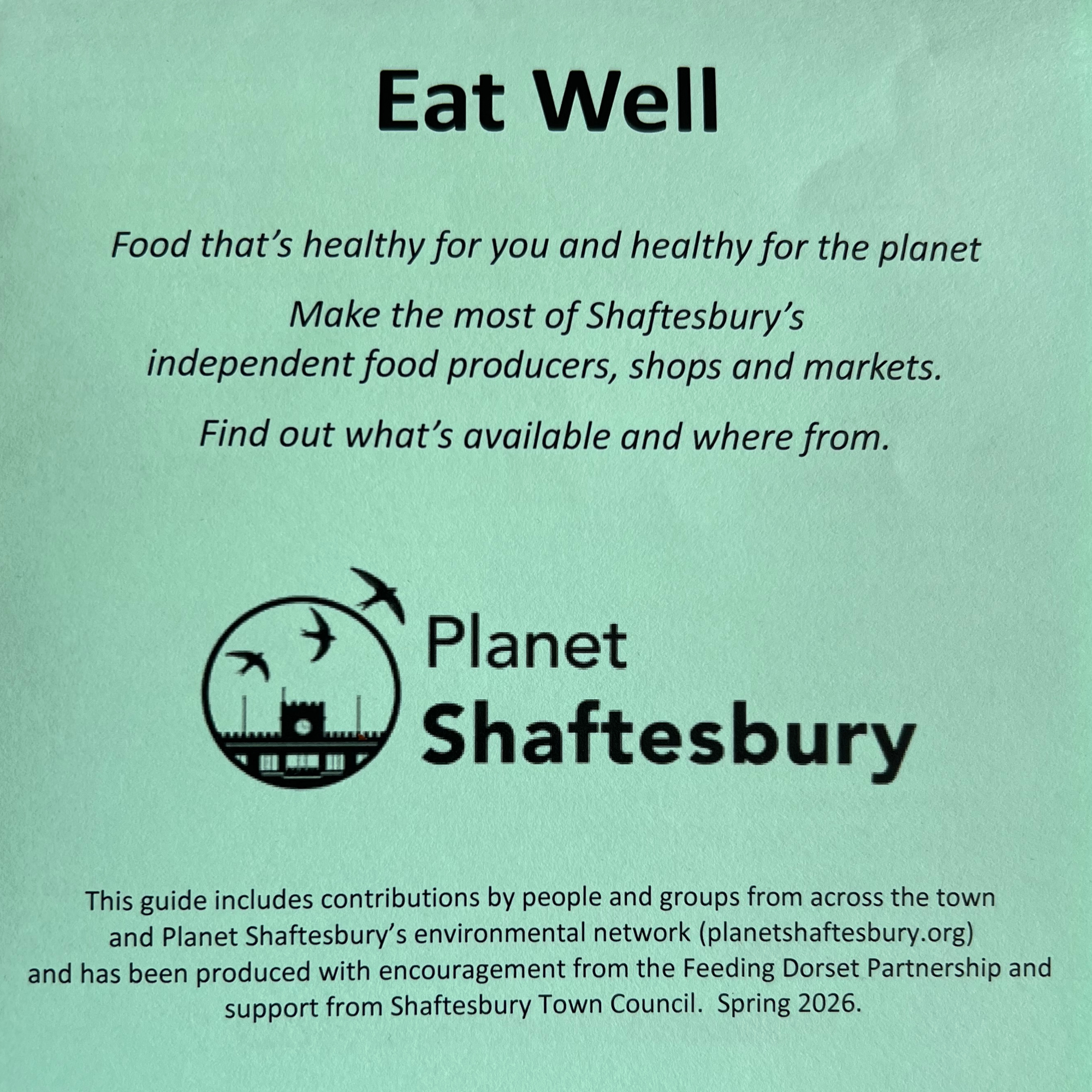
An updated version of the popular ‘Eat Well’ leaflet, unveiled at the Shaftesbury Food Festival last weekend, is the latest in a series of takeaway information pamphlets about Shaftesbury’s flora, fauna and food now available from various places in town.
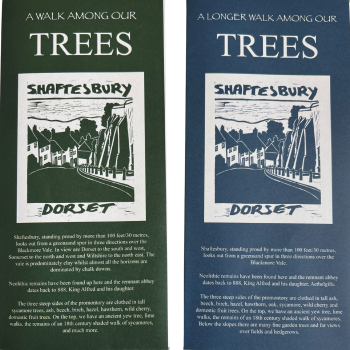
Also released in the last few weeks are new versions of Shaftesbury’s ever popular tree walks leaflets and its Orchard Town leaflet, and all four will be joined shortly by a reprint of the now famous ‘Let’s Go Wild’ foldout pamphlet.


A notable feature of the ‘Eat Well’ publication – that has sections of where to buy such locally-sourced items as meat and fish, fruit and veg, eggs and dairy, and bread and savouries – is an online map via QR code to help people find the local food and drink suppliers listed.
See more information on the Planet Shaftesbury Eat Well page
…and as if to prove the point
Clearly taking inspiration from Shaftesbury’s very own ‘Let’s Go Wild’ leaflet, the latest summer issue of the National Trust‘s monthly magazine has an article on how private gardens can become part of the battle to save nature and combat climate change.
Pointing out that public and domestic gardens cover about 4.6 per cent of the UK, the National Trust’s head of gardens and parks Sheila Das writes that linked together they can ‘form powerful wildlife corridors’ and bring ‘more diversity into our lives again.’
Just, in fact, as the ‘Let’s Go Wild’ leaflet and SuSAC have been advocating for the last three years and now forming an integral part of our National Trust-supported ‘Green Wheel’ project!
Don’t ever let anyone say that ordinary people can’t make a difference!
8 May 2026
PLANNING 2: Dorset delays two major planning policy documents – with no end yet in sight
The publication of two of Dorset Council’s major planning policy documents has been delayed and the council does not yet know when the public will get to see them to comment on them.
Speaking to an audience of Shaftesbury residents last week at a special ‘Question and Answer’ session at Shaftesbury town hall, Dorset Council Leader Cllr Nick Ireland said the council did not yet have a release date for draft Dorset Design Code or the new Dorset Local Transport Plan 2026-2041.
Consultation on both plans took place last autumn and it was understood that both would have been published in draft form by now.
Cllr Ireland was responding to questions from Sustainable Shaftesbury Advisory Committee (SuSAC) members Richard Thomas and John Nelson.
Richard asked: What is the latest situation with progress towards producing a Dorset Design Code? Your consultants PTE promised a draft by April and we’re almost into May. So when is the first draft to be published and am I right that it will, when adopted, form an integral part of the new Dorset Local Plan?
And in your capacity as portfolio holder for climate, performance and safeguarding, will the code include such ecologically essential details as insisting that all new homes are built with solar panels, heat pumps and ‘swift bricks’ and that planning officers insist on measures to promote biodiversity – such the provision of ‘wildlife corridors’ (as in Shaftesbury’s Green Wheel project) – are a fundamental condition on all new housing developments, especially those in urban areas put in for by the volume house-builders that always appear to be the worst ‘offenders’?
Cllr Ireland’s reply, read from a response drafted for him by council officials, was: ‘[Design Code] consultants PTE have been working with officers to prepare a draft code [but] the programme is running a little behind schedule due to an extended programme of stakeholder engagement prior to Christmas.
‘The [council’s] core team have received a very first draft of several parts of the code and are currently reviewing it working with colleagues across Dorset Council to ensure the proposals within it support our needs operationally.
‘[Through] the drafting of the code, there have been a lot of reforms to planning nationally including the NPPF [National Planning Policy Framework] and Design & Placemaking Planning Practice Guidance [and] we have needed to take this into account also to ensure the code is future-proofed. Future Homes Standards* will support the code [see below for more detail].
‘Due to the timing of the Local Plan adoption, the design code will most likely be approved as a standalone document acting as a material consideration in the consideration of planning proposals. The design code is expected to carry greater weight when the local plan is adopted, most likely as a supplementary plan.
‘The code will incorporate measures to improve sustainability and climate resilience. It will complement Future Homes Standards and Building Control requirements. Integrated nature will exist as a key design code principle building on the expectations set through national design standards.
‘We intend to engage further on the code this year, but we are mindful of the Local Plan programme and priority. More detail on consultation arrangements will be provided in due course.’
Speaking for himself, he said the Code, when adopted, would form part of the Dorset Local Plan and therefore have a bearing on what was built and how it was built and where. The idea was to help protect and enhance local building styles in different parts of Dorset to maintain local distinctiveness. But he was unable to be any clearer when a draft might be available to the wider public.
In answer to John Nelson, who asked when the Local Transport Plan that was consulted on between August and October last year would be published Cllr Ireland said he did not know but would follow it up and get back to him.
Shaftesbury Dorset Cllr Derek Beer, in the audience, intervened to say that despite the team at Dorset Council having done a lot of work on the plan there were concerns about the number of developments that were still coming from ‘the Centre’ and that these would have to be taken into account or the plan might get rejected. (It was not made clear what ‘the Centre’ referred to but it is presumed it meant Whitehall.)
*The Future Homes Standard (FHS), part of England’s Building Regulations, mandates that new homes built from 2027 must be ‘net-zero ready,’ producing significantly lower carbon emissions – roughly 75% less – than 2013 standards. The regulation, officially released in March 2026 and coming into force in 2027, bans fossil fuel heating systems and prioritises high-efficiency building fabric (insulation, windows etc) and solar panels.
6 May 2026
SPECIAL REPORT
CLIMATE: Dorset’s leader sets out the county’s vision to meet the People’s Emergency Briefing film’s challenges


Responding to The People’s Emergency Briefing film now doing the rounds of towns and parishes in Dorset as throughout the country, Dorset Council leader Nick Ireland has said he expects his council ‘to lead by example’ in tackling the climate and nature crisis.
And he insisted ‘planning is one of the strongest climate powers councils hold in England’ as it ‘effectively shapes emissions and resilience for decades.’
But at the same time he warned Dorset Council ‘should not pretend’ it can do it all alone.
‘For credibility, it is important to be explicit that Dorset Council cannot by itself prevent global temperature rise, replace national energy or transport policy or fully fund adaptation without stable central government support,’ he said.
The People’s Emergency Briefing film is based on the National Emergency Briefing (NEB), a national conference held in Westminster in November at which nine of Britain’s top scientists warned about the range of approaching threats to human life on Earth from a combination of extreme weather and rapid loss of the natural world.
‘The NEB calls for national mobilisation but it also recognises that councils deliver change on the ground provided government enables them properly,’ said Cllr Ireland.
Cllr Ireland, who attended the National Emergency Briefing (NEB) in London, as well as local MP Simon Hoare, was responding this week to a question from Richard Thomas, chair of Shaftesbury Town Council’s Sustainable Shaftesbury Advisory Committee.
Richard had asked Cllr Ireland what Dorset Council has done, is doing and will do to respond to the issues highlighted in The People’s Emergency Briefing film and what can town and parish councils do to help the council as well as themselves, for example in supporting initiatives such as Shaftesbury’s Orchard Town, Nature Friendly Town and Green Wheel projects for nature recovery?
Cllr Ireland, in a long and detailed response, reiterated that the National Emergency Briefing had brought together evidence from leading UK scientists on how climate and nature breakdown are already affecting the UK through:
- more frequent and extreme weather (heatwaves, flooding, drought, storms)
- rising food insecurity and agricultural disruption
- threats to public health, especially heat stress and flooding-related illness
- nature collapse, reducing ecosystem resilience
- systemic economic risks and infrastructure failure if warming exceeds 2–3°C.
He said the ‘consistent message is that national action alone will not be sufficient and that local delivery is critical because most real-world decisions – planning, transport, buildings, land use, emergency response – happen locally.
Thus the realistic role of Dorset Council, as it can’t control national energy markets, aviation, or fossil fuel extraction, he said, is ‘to try and control or influence a large share of the levers that determine Dorset’s emissions and resilience as a council.’
Legally, he said, English councils operate through a “mosaic” of powers rather than a single climate duty, relying on planning and development control, flood and emergency management duties, transport, housing, waste, highways and public health functions, and the so-called ‘general power of competence’ that enables council’s to take action beyond minimum statutory duties where justified.
He said the ‘realistic, high impact actions Dorset Council can take’ is to
- reduce emissions where Dorset Council has direct control
- use the planning system as a climate lever
- prepare Dorset for unavoidable climate impacts through adaptation
- protect and restore nature as infrastructure
- support households, communities and the local economy.
Reducing emissions
Taking actions to reduce missions are the most reliable and lowest risk because Dorset Council controls the assets. The council can do this by
- continuing the decarbonising of council buildings and its estate by retrofitting, installing heat pumps, solar panels and improving energy efficiency
- accelerating the electrification of the council fleet and its procurement standards.
- requiring net zero operational standards for new council developments and schools.
Cllr Ireland claimed Dorset has already achieved ‘significant emissions reductions from its own operations since 2019’.
Using the planning system as a climate lever
The NEB is clear that infrastructure and land use decisions must align with climate reality, not historic norms, and Cllr Ireland said what Dorset Council can realistically do now is to:
- strengthen local plan policies on energy efficiency and low carbon heating, overheating standards by shading, ventilation and providing green space, and through flood risk avoidance and Sustainable Drainage Systems (SuDS)
- resist development in areas that will become unsustainable under future climate scenarios, even if technically viable today
- embed nature-based solutions in new development such as trees, wetlands and green corridors.
‘Planning is one of the strongest climate powers councils hold in England, effectively shaping emissions and resilience for decades,’ he said.
Prepare Dorset for unavoidable climate impacts through adaptation
Cllr Ireland said that the NEB stresses that even rapid emissions cuts will not prevent serious impact on society in the short term. ‘Priority risks’ in Dorset are from:
- flooding from rivers, surface water and the sea
- heatwaves affecting older and vulnerable residents
- coastal erosion and infrastructure risk
- drought and water stress affecting farming and ecosystems.
He said what Dorset Council can do in response is to:
- complete and implement a countywide Climate Adaptation Strategy, building on its climate risk assessment
- expand natural flood management through catchment restoration, wetlands, and soil health
- align emergency planning, public health, adult social care and highways maintenance to extreme weather readiness.
He said these actions are realistic because they ‘build directly on existing statutory duties for flood risk, emergencies and public health rather than creating new structures.
Protect and restore nature as infrastructure
The NEB highlights that the climate and nature crises are inseparable and so what Dorset Council can realistically do is to:
- deliver the Local Nature Recovery Strategy at scale
- treat chalk streams, floodplains, woodlands and soils as critical infrastructure, not just “nice to have” assets
- integrate biodiversity recovery into highways, estates and capital programmes.
This matters because healthy ecosystems absorb floods, reduce heat, store carbon and protect food systems – often more cheaply than engineered solutions.
Support households, communities and the local economy
Councils cannot force behaviour change, he said, but they can remove barriers identified by the NEB that stresses fairness, public consent and community level delivery as essential for rapid transition. Dorset Council can help by:
- expanding schemes such as Healthy Homes Dorset, Solar Together and business retrofit support
- using convening power to bring together farmers, businesses, NHS, utilities and communities around resilience planning
- targeting support at fuel poor and climate vulnerable residents
- continue to roll-out both off and on street EV charging points
Cllr Ireland concluded by saying that realistically Dorset Council can cut emissions it directly controls, lock in low carbon and climate safe development, prepare communities for unavoidable impacts, restore nature as a resilience asset, and enable rather than lecture residents and businesses.
‘This is not symbolic action,’ he said. ‘It’s delivery where Dorset has real power, and it is exactly the kind of leadership the National Emergency Briefing argues is essential if the UK is to avoid far worse outcomes.’
He added that as for the part to be played by town and parish councils, this is something that he claimed will be part of what he called a ‘Community Conversation’ exercise later this year.
This, he said, is a continuation of the major ‘A Big Conversation’ community engagement exercise his administration introduced in 2024 to shape the council’s priorities for the next five years. The initiative focuses on listening to residents from all backgrounds across the county to understand what matters most to them on four four main areas, known as the council’s ‘proposed priorities’, viz:
- Growing the economy
- Providing high-quality housing
- Responding to the climate crisis
- Supporting communities for all
‘The aim is to move beyond standard surveys to create a more meaningful dialogue to inform the new Council Plan,’ he said.
Cllr Ireland didn’t have a date when the latest phase of the Community Conversation exercise would start but said it would be soon.
For more information on everything in this report see:
[Independent Assessment of UK Climate Risk]
[CAG Consultants Informing Positive Change | Home page]
[Dorset Local Nature Partnership | Home page]
[Local Government Association | Home page]
Point of Care Foundation on the Community Conversation process.
1 May 2026
For older posts please head to Sustainable Shaftesbury archived news.
Sustainable Shaftesbury Archived News – Shaftesbury Town Council
Sustainable Shaftesbury Advisory Committee
Sustainable Shaftesbury Advisory Committee (SuSAC) is a formal committee of Shaftesbury Town Council that operates through a series of working groups. It meets monthly and its meetings are open to the general public.
Upcoming meeting dates, along with the minutes from past meetings are available on the Sustainable Shaftesbury Advisory Committee (SuSAC) page.
SuSAC working groups
The working groups are now reviewing their relevant parts of the Sustainable Shaftesbury Action Plan 2024-2031. Please contact the named leads c/o Shaftesbury Town Hall if you have your own suggestions for improvements. (Nov 2025).
Biodiversity/Nature Friendly Town/Orchard Town: Amber Harrison (co-lead), Jen Hirsch (co-lead), Lucy Young, Mike Cummings, Bernard Ede, Joe Hashman, Sue Clifford, Angela King, Gideon King, John Nelson, Christina Strickland, Richard Thomas
Green Wheel sub-group: Sue Clifford (co-lead), Angela King (co-lead), Mike Cummings, Bernard Ede, John Nelson, Christina Strickland, Richard Thomas, Lucy Young
Circular economy: In partnership with Shaftesbury & District Chamber of Commerce.
Clean air & dark skies: Vacant
Food: Lucy Young (lead)
Energy & retrofitting: Jennifer Morisetti (lead), Richard Thomas
Health & wellbeing: Vacant
Local transport & footpaths: John Nelson (lead), Joe Hashman (Shaftesbury Rights of Way volunteer warden)
Planning: Mike Cummings (lead), Bernard Ede, Chris Maude, Richard Thomas
Waste & recycling: Vacant
Water (rivers, streams and ponds): Mike Cummings (lead), John Nelson
Community worksheds: Cllr Lester Dibben (lead)
All working group leads welcome input from anyone in the community with an interest in the subject who would like to help develop ideas and make positive things happen. Contact is c/o the Town Hall office@shaftesbury-tc.gov.uk
Partners of Sustainable Shaftesbury: Butterfly Conservation, Cranborne Chase National Landscape, Dorset Wildlife Trust, National Trust in Dorset, Dorset CPRE, Dorset Climate Action Network, Great Big Dorset Hedge Project, Hilltop Litter Pickers, Planet Shaftesbury, Shaftesbury Arts & Culture Advisory Committee, Shaftesbury Home Grown, Shaftesbury Neighbourhood Plan Advisory Committee, Shaftesbury Tree Group.